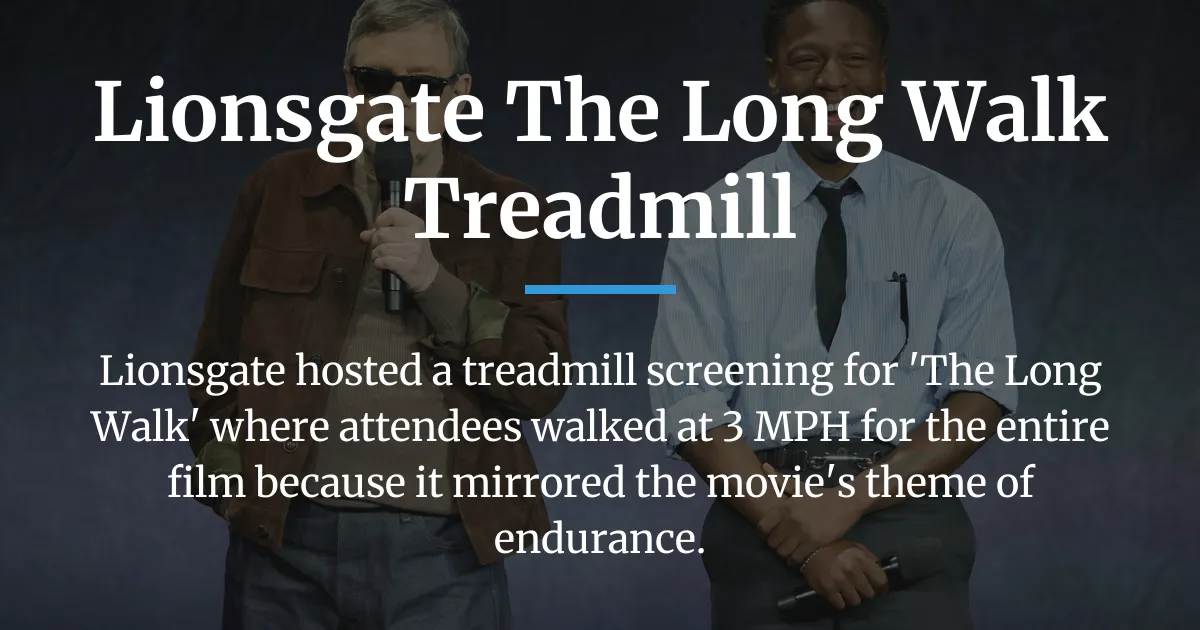
In 2025, Lionsgate staged a unique promotional stunt for the Stephen King film adaptation ‘The Long Walk’. They organized a special screening where invited guests had to walk on treadmills for the movie’s full runtime. This lionsgate the long walk treadmill event was a bold attempt to physically immerse the audience in the story’s brutal contest of endurance.
The Lionsgate The Long Walk Treadmill Screening: What It Was
The event was a one-time, immersive movie screening held by Lionsgate. It directly tied the viewing experience to the film’s core premise.
The Core Concept: A Match of Theme and Medium
‘The Long Walk’ is a story about a deadly competition where teen boys must walk without stopping. Lionsgate translated this into a real-world challenge. Audience members became active participants, not passive viewers. They had to keep walking to keep watching the film.
This created a powerful link between the content and the viewer’s body. The concept turned a standard screening into a memorable physical test. It aimed to generate buzz through shared experience and novelty.
Key Event Details: Date, Location, and Runtime
The screening took place on a Saturday during the 2025 Labor Day weekend. It was held at the Culver Theater in Los Angeles, California. This venue is known for hosting special film events.
The movie ‘The Long Walk’ has a runtime of approximately one hour and forty-eight minutes. This meant attendees were on the treadmills for nearly two full hours. The entire event was a controlled, invite-only affair managed by Lionsgate’s marketing team.
The 3 MPH Rule and the Stakes
The central rule was simple but demanding. Each treadmill was set to a speed of 3 miles per hour. Attendees had to maintain this pace for the duration of the film.
If a person slowed down or stopped, they were considered “eliminated”. This mirrored the fate of characters in the movie. The stakes were purely experiential, not life-threatening. Yet, they added a layer of real tension to the screening.
How The Treadmill Screening Actually Worked
Beyond the basic idea, the practical execution of the event involved specific logistics. Understanding these details reveals how such a stunt was managed.
Ticketing and Audience Selection
This was not a publicly ticketed event. Lionsgate did not sell tickets through normal channels. Instead, attendance was by invitation only.
Guests were likely selected from a pool of media professionals, influencers, and superfans. This included journalists like Alison Foreman from IndieWire. The selection process focused on those who could amplify the event’s story through coverage and social media.
The Culver Theater Setup
The theater was specially configured for this event. Rows of treadmills replaced the traditional stadium seating. Each treadmill faced a large cinema screen.
The room was kept dark, like a standard movie theater. This isolated the walkers with the film’s visuals and sounds. The setup was designed to minimize distractions and maximize immersion in the physical task.
The Official Rules of Engagement
Before the film started, attendees were briefed on the rules. The primary rule was to maintain the 3 MPH pace. There were no formal breaks scheduled during the screening.
Participants were not allowed to pause their treadmills. Stepping off the machine meant elimination from the event. Staff and possibly live performers monitored the room to enforce these rules.
Understanding the “Elimination” Concept
Elimination was symbolic, not punitive. If someone stopped walking, they were asked to leave the treadmill area. They could likely still watch the remainder of the film from a separate seating area.
This process mirrored the novel’s brutal elimination of contestants. It added a game-like structure to the evening. The goal for many was to be the “last man” walking, just like in the film’s narrative.
The Physical and Mental Demands of the Experience
Participating in this event was more than a gimmick. It presented a genuine physical challenge with psychological layers.
From Novelty to Fatigue: The Mile-by-Mile Reality
Walking at 3 MPH for almost two hours equates to covering about 5 to 6 miles. For the average person, this is a significant sustained effort. Initial novelty quickly gave way to muscle fatigue and discomfort.
Attendees reported feeling the strain in their legs, feet, and lower back. The constant motion made it hard to fully relax into the movie. This physical struggle became a core part of the viewing experience.
Psychological Pressure and Cinematic Immersion
The rule against stopping created a low-grade psychological pressure. Participants were aware they were being watched. This pressure amplified the film’s themes of surveillance and endurance.
Being physically active while watching also changed how the story was processed. The audience’s own fatigue made them more empathetic to the characters’ plight. This deepened the connection to the film in a way passive viewing cannot.
Comparing the Challenge to the Film’s Narrative
The film follows teen boys like Raymond Garraty in a deadly walking contest. The treadmill event let viewers simulate a tiny fraction of that ordeal. Of course, the real movie characters face death, while attendees only faced discomfort.
Yet, the event cleverly highlighted the story’s focus on mind over matter. It asked participants to push through boredom and physical strain. This parallel was the stunt’s greatest success in creating thematic resonance.
The Marketing Strategy Behind the Stunt
This event was not just a fun experiment. It was a calculated piece of marketing designed for the modern media landscape.
Beyond a Gimmick: Experiential Hype in Modern Film
Lionsgate’s tactic is part of a larger trend called experiential marketing. Studios create unique, shareable events to generate buzz. Examples include ‘Squid Game’ trials or ‘Hunger Games’ pop-ups.
The goal is to create content about the content. The treadmill screening generated articles, social media posts, and word-of-mouth. This free publicity often reaches more people than traditional ads.
Lionsgate’s Playbook: Connecting to The Hunger Games Legacy
Lionsgate has a history with dystopian young adult films like ‘The Hunger Games’. Director Francis Lawrence, who worked on ‘The Hunger Games’, also directed ‘The Long Walk’. This connection is no coincidence.
The studio used similar hype-building tactics for its past franchises. The treadmill event applied that playbook to a new Stephen King adaptation. It positioned ‘The Long Walk’ as a major event film for a dedicated genre audience.
Measuring the Success of an Immersive Campaign
Success for such a stunt is measured in media impressions and social engagement. The event was covered by major outlets like IndieWire and Mashable. It trended on platforms like Flipboard, generating widespread discussion.
The unique angle ensured articles were not just reviews but stories about an experience. This extended the film’s reach beyond typical movie news circles. It created a memorable hook that distinguished it from other releases.
Will This Become a New Trend for Genre Films?
Extreme screenings may become more common for specific genres. Horror and dystopian stories lend themselves to immersive, physical marketing. However, the cost and logistics limit such events to niche promotions.
Most films will not adopt this model. Yet, it shows studios are willing to innovate for fan engagement. Future promotions might use virtual reality or interactive elements instead of physical strain.
Frequently Asked Questions
Was the Lionsgate The Long Walk treadmill screening a paid event or invite-only?
It was strictly invite-only. Lionsgate did not sell tickets to the public. Attendance was granted through a selection process targeting media and influencers to maximize coverage.
Where exactly did the Lionsgate The Long Walk treadmill event take place?
The event was held at the Culver Theater in Los Angeles, California. This venue was chosen for its ability to host customized, special screening events.
Could you pause the treadmill during the movie?
No, pausing or stopping the treadmill was not allowed. Doing so would result in elimination from the active walking area, as per the event’s rules designed to mirror the film’s challenge.
Has Lionsgate announced any future treadmill screening events?
As of 2025, Lionsgate has not announced plans for more treadmill screenings. This was a one-time promotional stunt for ‘The Long Walk’, and no similar events for other films have been confirmed.
What is the connection between this marketing and The Hunger Games?
Both are Lionsgate dystopian projects, with ‘The Long Walk’ directed by Francis Lawrence, who also directed ‘Hunger Games’ films. The studio used similar experiential marketing tactics to build hype for a dedicated fanbase.
How many miles did attendees walk during the screening?
At a constant speed of 3 miles per hour for about 1 hour and 48 minutes, attendees walked approximately 5.4 miles. This was a substantial physical effort for a movie screening.
What happened if someone could not keep up the pace?
If someone slowed down or stopped, they were “eliminated” and asked to leave the treadmill. They could likely still watch the rest of the film from a separate seating area without walking.
Who were the actors or filmmakers present at the event?
While not explicitly confirmed, events like this sometimes involve filmmakers or cast. For ‘The Long Walk’, figures like director Francis Lawrence or actors such as David Jonsson or Cooper Hoffman may have attended to support the film.
Conclusion
The Lionsgate the long walk treadmill event was a clever fusion of content and marketing. It provided a tangible, physical connection to a story about endurance. While not a model for every film, it demonstrated the power of immersive experiences in creating lasting buzz and audience engagement.