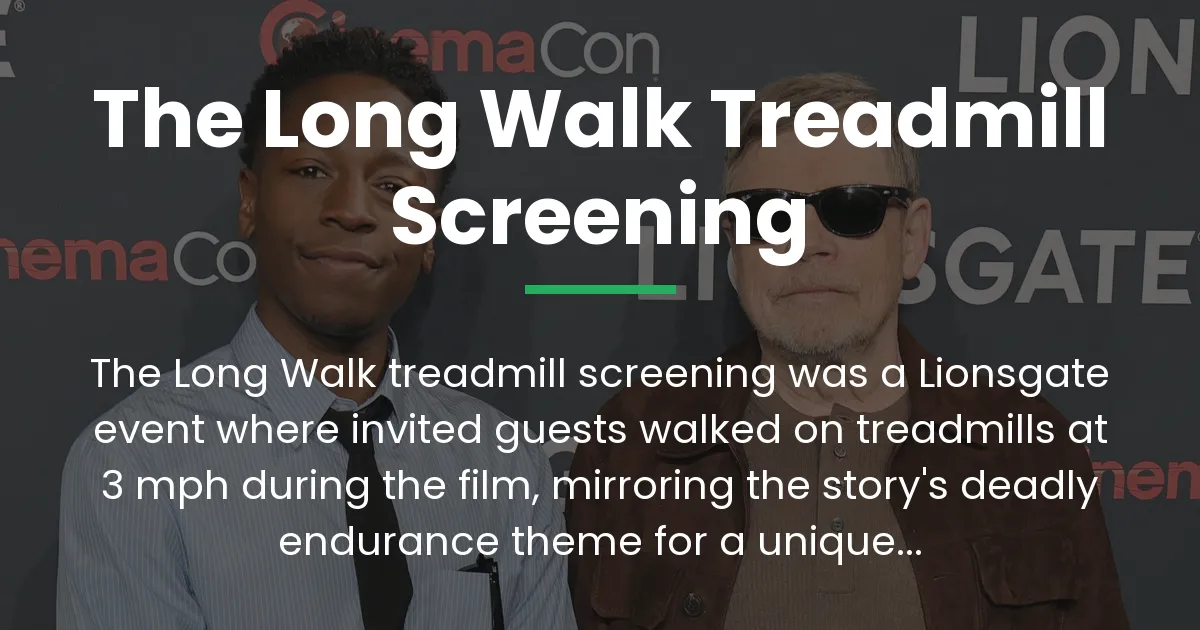
In August 2025, a unique film promotion captured global attention. Lionsgate hosted the long walk treadmill screening for the upcoming Stephen King adaptation. This event required attendees to walk on treadmills at a steady pace for the entire film. It was a brilliant mix of marketing and thematic immersion, turning a movie screening into a physical challenge.
The Event Facts and Core Rule
This special event was held by Lionsgate to promote “The Long Walk.” It took place on August 30, 2025. The location was the historic Culver Theater in Los Angeles.
The Lionsgate Invitation in Los Angeles
Lionsgate organized an influencers-only screening. This meant tickets were not sold to the general public. Invitations went out to celebrities, social media influencers, and members of the press.
The Culver Theater was chosen for its iconic status. It provided a perfect backdrop for this experimental event. The theater house was transformed to accommodate the unusual setup.
This exclusive approach ensured high-profile attendance. It also guaranteed extensive media coverage. The event was designed to create buzz through shared experiences online.
The Non-Negotiable 3 MPH Mandate
The core rule was simple but strict. Every attendee had to walk on a treadmill set to 3 miles per hour. This pace had to be maintained for the film’s full duration.
The film runs for 1 hour and 48 minutes. This meant walking roughly 5 miles without a break. The rule was enforced by security personnel throughout the screening.
If anyone stopped walking or slowed down, they were escorted out. This mirrored the fatal consequence in the story. It added a layer of real pressure to the viewing experience.
The Star-Studded and Influencer Audience
The guest list included notable figures from film and digital media. Actors from the film like Cooper Hoffman and Judy Greer attended. Director Francis Lawrence, known for “The Hunger Games,” was also present.
Other celebrities mentioned in reports include David Jonsson, Mark Hamill, and Ben Wang. Social media influencers with large followings were invited too. Their participation helped spread word of the event far and wide.
This curated audience maximized the event’s impact. Each attendee became a storyteller for the film. Their posts and reviews amplified the promotional reach organically.
The Metaphor in Motion
The treadmill screening was more than a quirky stunt. It served as a direct physical metaphor for the film’s central theme. This connection elevated the event from simple promotion to artistic statement.
From Page to Treadmill Belt: The Story’s Prime Directive
“The Long Walk” is a Stephen King story about a deadly competition. Participants must maintain a steady walking pace without stopping. Failure results in immediate death, enforced by soldiers.
The film adaptation, directed by Francis Lawrence, carries this theme of relentless endurance. By placing attendees on treadmills, the screening forced them into a similar rhythm. They experienced the mechanical monotony of the walk firsthand.
This clever translation from page to experience deepened audience understanding. It highlighted the story’s core of psychological and physical strain. Viewers didn’t just see the walk; they felt its relentless demand.
Why a Treadmill Was the Only Logical Prop
A treadmill was the perfect device for this immersion. It enforces constant motion at a predetermined speed. This mirrors the inexorable rule governing the characters in the story.
Other props or challenges could have been used. But none capture the specific blend of monotony and urgency. The treadmill’s moving belt visually represents the endless road ahead.
This choice demonstrates deep thematic thinking by the marketers. It shows an understanding that the promotion should embody the story’s essence. The medium became an integral part of the message.
Creating Complicity in the Film’s Central Conflict
By walking on the treadmills, attendees became active participants. They were no longer passive observers of the film’s conflict. They were enacting a mild version of it themselves.
This created a sense of complicity and shared anxiety. Everyone in the room was subject to the same rule. The threat of removal for stopping made the stakes feel personal.
This complicity forged a unique bond among the audience. It transformed the screening into a collective endurance test. The line between watching a thriller and living a simulated part of it blurred beautifully.
Inside the Treadmill Screening Experience
Understanding the logistics and atmosphere is key. The actual experience inside the Culver Theater was a blend of cinema and gym session.
The Layout of the Culver Theater
The theater was arranged with rows of treadmills facing the large screen. Each treadmill was spaced to allow safe operation and a clear view. The room was set up like a cinematic gymnasium.
Attendees were provided with water bottles and towels. This acknowledged the physical exertion required. The setting was functional yet focused on the film.
The screen dominated the front, ensuring the movie remained the centerpiece. This layout emphasized the dual focus on physical activity and visual storytelling. It was a carefully engineered environment for immersion.
The Collective Atmosphere of Focused Dread
As the film began, a unique atmosphere settled over the room. The consistent hum and rhythm of dozens of treadmills created a backdrop of sound. This noise underscored the tension on screen.
A sense of focused dread was palpable. Attendees concentrated on their pace while trying to follow the plot. The shared physical effort produced a silent camaraderie mixed with anxiety.
This collective mood amplified the film’s chilling and emotional thrills. The audience’s physical state mirrored the characters’ mental strain. It was a shared experience of sustained pressure.
Witnessing the First “Stoppers”
During the screening, some attendees inevitably faltered. Whether from fatigue, distraction, or discomfort, they stopped walking. Security personnel promptly and quietly escorted them out of the theater.
For those who remained, witnessing these “stoppers” was a chilling moment. It reinforced the reality of the rule and raised the personal stakes. Each removal served as a stark reminder of the consequence of failure.
This element mirrored the sudden deaths in the film. It added a layer of visceral realism to the viewing experience. The competition among the audience, though unspoken, became tangible.
Biometrics and Shared Anxiety
An often-overlooked aspect is the biometric response. The physical exertion naturally elevated attendees’ heart rates. This physiological state synced with the film’s tense narrative peaks.
The shared anxiety had a physical dimension. People were not just mentally engaged but physically activated. Their vital signs became an unconscious part of the performance.
This created a unique form of biometrics screening in an informal sense. The audience’s bodies reacted in real-time to the story’s demands. This deep physical immersion is what set the event apart from standard screenings.
Beyond the Gimmick Lasting Impact
The treadmill screening’s influence extended far beyond a single night. It set new precedents for how films can connect with audiences before release.
A Masterclass in Earned Media and Hype
Lionsgate’s strategy was a masterclass in generating earned media. The event’s unique premise guaranteed news coverage. Outlets from IndieWire to social media platforms reported on it extensively.
This coverage acted as free, credible advertising. The story of the screening spread because it was inherently shareable. It tapped into the public’s interest in novel experiences.
The cost-effectiveness of this buzz cannot be overstated. Compared to traditional ad campaigns, this event created a deeper, more memorable impression. It proved that creativity can trump budget in marketing.
Setting a New Bar for Thematic Film Promotion
This event raised the bar for thematic film promotion. It demonstrated that marketing can be an authentic extension of the art. The promotion itself can enhance and reflect the film’s core ideas.
Future campaigns for other genres may take inspiration. A horror film could host a screening in a haunted location. An adventure movie might incorporate physical challenges for attendees.
The key lesson is alignment. The promotional activity must feel organically tied to the story. This creates a cohesive and powerful brand experience that resonates deeply.
The Long Walk Treadmill Screening as Cultural Benchmark
The event has already become a cultural benchmark in film marketing. It is frequently cited as an example of innovative, experiential promotion. It shows how to break through the noise in a crowded media landscape.
It also reflects a shift in audience expectations. People seek memorable, participative events they can discuss and share. This screening delivered exactly that, creating lasting conversations.
As we look to the future, this screening will be remembered as a pioneer. It paved the way for more daring and immersive forms of audience engagement. Its legacy is a challenge to marketers to think more creatively.
Frequently Asked Questions
How could I get tickets to The Long Walk treadmill screening?
Tickets were by invitation only from Lionsgate. This was an influencers-only event, so the general public could not purchase tickets. Attendance was limited to selected celebrities, press, and social media influencers.
Will there be more The Long Walk treadmill screening events in other cities?
As of now, Lionsgate has not announced any plans for additional treadmill screenings. The Los Angeles event was a unique, one-time promotional stunt. However, the concept may inspire similar events for other films in the future.
What happens if someone needed to use the bathroom during the screening?
The rules were strict with no exceptions for breaks. Attendees were advised to use restrooms before the film started. Stopping for any reason, including a bathroom break, would result in removal from the theater.
Was the treadmill speed of 3 mph strictly enforced for everyone?
Yes, the 3 mph speed was strictly enforced for all attendees. Security personnel monitored the room throughout the screening. Anyone who stopped or could not maintain the pace was escorted out.
Has any other film used a similar biometric or physical challenge screening?
While unique, other films have experimented with immersive screenings. For example, some horror films host events in scary locations. However, the direct physical challenge of a treadmill tied to a film’s plot is a distinctive innovation for “The Long Walk.”
Where did the treadmill screening take place?
The event was held at the Culver Theater in Los Angeles, California. This specific theater was chosen for its capacity and iconic status within the film industry.
How long did attendees have to walk on the treadmills?
Attendees walked for the entire runtime of the film, which is 1 hour and 48 minutes. At a constant speed of 3 mph, this meant walking a distance of approximately 5 miles without stopping.
What was the reaction from celebrities who attended?
Celebrity attendees shared positive and intrigued reactions on social media. Many praised the originality and intensity of the experience. Their posts helped generate significant online buzz for the upcoming film.
Conclusion
The long walk treadmill screening was a landmark fusion of marketing and artistic immersion. It successfully translated Stephen King’s tense narrative into a real-world physical experience. This event demonstrated the power of creative promotion that respects and amplifies its source material. It will be remembered as a clever, effective benchmark for how to engage an audience deeply and memorably.