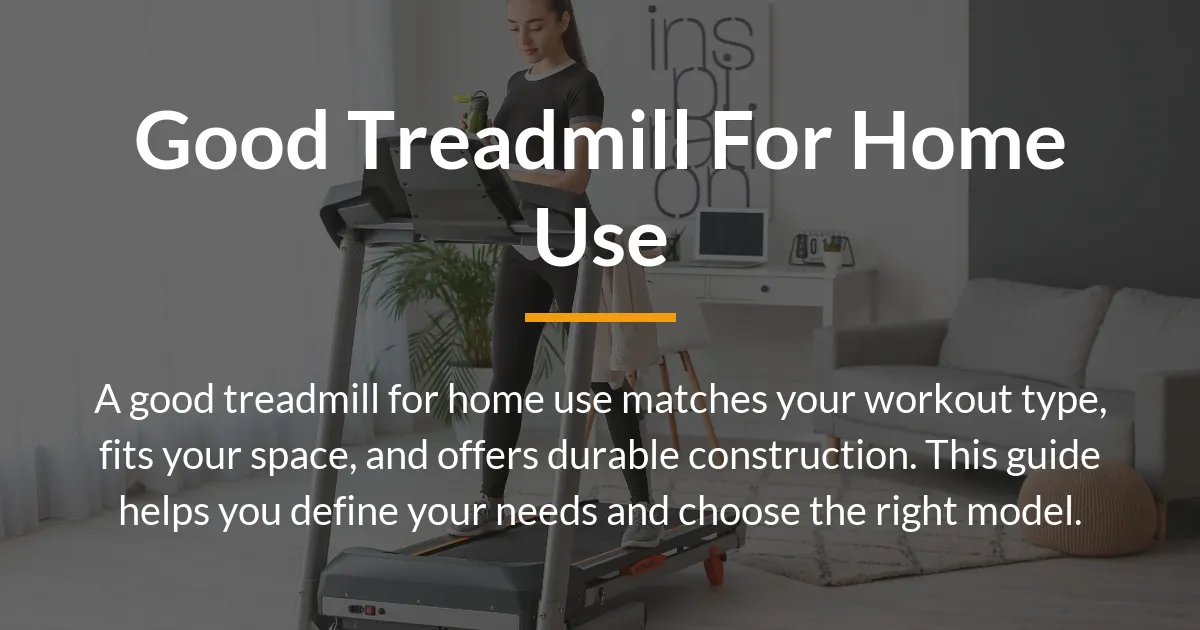
Searching for a good treadmill for home use can feel overwhelming with so many options. The truth is, the best treadmill isn’t the one with the highest rating on a generic list. A good treadmill for your home is the one that disappears seamlessly into your life, supporting your specific fitness goals without becoming a source of hassle or regret. This guide will first help you define what “good” means for you, then translate confusing specifications, and finally point you toward models that truly fit a home environment.
Define Your Home Fitness Profile
Before you look at a single product, you need to be your own expert. The most common mistake is buying a machine built for someone else’s lifestyle. Take a moment to answer these questions honestly; they are more important than any brand name or feature.
Assessing Your Primary Workout Type
How you plan to use the treadmill dictates its core engineering needs. A machine built for gentle walks will struggle and break down under the force of daily running.
If you are primarily a walker or occasional jogger, your requirements are more forgiving. You can prioritize a compact footprint and a quieter motor. Your focus should be on comfort and consistency rather than extreme performance.
For the avid runner, every detail matters. You need a motor with strong, continuous power to handle sustained pace without straining. A longer, wider running deck is non-negotiable for a natural stride. The frame must be exceptionally sturdy to absorb impact without wobbling.
Also, consider your training style. Do you rely on hill simulations or interval training that frequently changes speed and incline? If so, a motor with a responsive duty cycle and a robust incline range becomes critical.
Measuring Your Physical Space and Environment
Your home is not a commercial gym. The physical realities of your space are a major limiting factor that many buyers ignore until it is too late.
You need to measure more than just the treadmill’s dimensions. Add at least two feet behind the machine and one foot on each side for safe mounting, dismounting, and emergency stops. Do not forget to check your ceiling height, especially if you are tall or considering a model with a high incline.
The type of flooring is crucial. Placing a heavy treadmill on a soft carpet can damage both the floor and the machine’s stability. A hard, level surface is always best, often requiring a protective equipment mat.
Finally, be realistic about noise. All treadmills generate some noise from the motor, belt, and footfalls. In an apartment or shared home, this can be a deal-breaker. Consider its placement in relation to bedrooms and neighboring units.
Setting a Realistic Total Budget
The price tag on the machine is just the start. To avoid surprises, build your total budget with all costs in mind.
First, factor in delivery and professional assembly fees, which can add hundreds of dollars. You may also need a quality equipment mat to protect your floors.
More importantly, think long-term. A slightly more expensive model with a better motor and warranty might save you thousands in repair costs over five years. Your budget should balance the upfront cost with the expected cost of ownership.
Understanding Treadmill Specifications
Treadmill specs are full of marketing terms. Here, we translate them into what they actually mean for your daily use at home, helping you spot the difference between a necessary feature and a flashy gimmick.
Motor Power and Duty Cycle
Look for Continuous Horsepower (CHP), not Peak HP. CHP measures the power the motor can sustain during your entire workout. For walking, a 2.5 CHP motor is often sufficient. For consistent running, aim for 3.0 CHP or higher.
The duty cycle is a hidden but vital spec. It tells you how long the motor can run at a given speed before needing to cool down. A home treadmill with a strong duty cycle means you can run for an hour without the motor overheating or losing power, which is key for avid runners.
A long motor warranty, like a lifetime warranty on the frame and motor, is a strong indicator of a manufacturer’s confidence in its durability. This often matters more than chasing the highest top speed you will never use.
Running Deck and Cushioning System
The deck is your running surface. Length is critical for runners. A deck shorter than 55 inches can feel dangerously cramped, forcing you to shorten your stride. A width of 20 inches or more provides comfort and security.
Cushioning systems are not just about comfort. They are designed to reduce the impact on your joints. Systems with adjustable cushioning let you choose a softer or firmer feel. While great cushioning is a benefit, the best protection for your body is still proper footwear and good running form.
Incline, Decline, and Maximum Speed
Incline capability adds intensity without increasing speed, making it excellent for burning more calories and building strength. A 10-15% incline is very useful for most home training. Decline, while less common, can aid in training for downhill running.
Be skeptical of extremely high maximum speeds. Most people training at home do not safely exceed 10-12 mph. A motor that can reliably deliver speeds up to 10 mph with a good incline is far more practical than one that lists a 12 mph top speed but struggles at higher speeds.
Console Features and Technology Integration
The console is the command center. Evaluate if you want a simple display for time, speed, and distance, or a large interactive screen for guided workouts.
Built-in workouts can provide great structure, but many users eventually connect to external fitness apps. Check for Bluetooth connectivity to sync with apps like Apple Watch or other fitness trackers for heart rate and metric tracking.
App integration like iFIT, Peloton, or Zwift can be a major selling point. These subscriptions offer immersive classes but add an ongoing cost. Decide if this guided experience is a core part of your motivation or just a nice extra.
Good Treadmill for Home Use Recommendations
Now, with your personal profile defined, we can match different user types with treadmill categories and specific models that exemplify those needs. Remember, a good treadmill for home use is about the right fit.
For the Dedicated Runner Seeking Durability
You need a machine that feels solid underfoot, session after session. Prioritize a strong motor, a long and wide deck, and a non-folding, commercial-style frame for maximum stability.
Models like the Sole F85 or the Landice L7 are often highlighted in this category. They are built with a sturdy frame and motors designed for long, hard use. The NordicTrack Commercial series, like the Commercial 1750, also fits here, offering a robust build paired with interactive technology.
For the Walker and Occasional Jogger in Limited Space
Your priorities are a compact footprint, a sensible price, and a folding design that saves space. You do not need the most powerful motor, but you do need reliable, quiet operation.
The Horizon T101 is a classic budget-friendly option that covers the essentials well. The Echelon Stride offers a slim folding design. For very tight spaces, walking pads or models like the Urevo Spacewalker provide a minimalist, no-frills solution for walking workouts.
For the Tech-Enabled User Who Wants Guided Training
If you thrive on instructor-led classes and scenic runs, the subscription ecosystem and screen are your main drivers. The machine itself must be competent, but the software experience is central.
The NordicTrack Commercial 1750 and 2450 are flagship models for iFIT integration. The Horizon 7.0 AT also offers a great blend of a strong motor and interactive programming without forcing you into a single app ecosystem.
For the Household Seeking Maximum Value and Simplicity
You want a workhorse. Focus is on a sturdy frame, a reliable motor for mixed use, essential features like heart rate monitoring and built-in programs, and the best warranty you can find.
The Sole F63 is a perennial favorite here, known for its simplicity and durability. The Bowflex T9 is another strong contender, offering a solid blend of features for a reasonable price. These models skip the huge screens but deliver on the fundamentals of good home exercise equipment.
Beyond the Brochure: The Realities of Home Treadmill Ownership
Owning a treadmill is a long-term relationship. The excitement of delivery day fades, and you are left with a large piece of machinery in your home. Being prepared for this reality is the final step in making a smart choice.
Delivery, Assembly, and Setup Logistics
Treadmills are heavy and bulky. Curbside delivery means you are responsible for getting it inside and up stairs. White-glove delivery and assembly are worth considering for the peace of mind and safety.
Once in place, ensure it is on a level surface. An unbalanced treadmill can cause premature wear on the belt and motor. Taking the time to set it up correctly from day one prevents many common issues.
A Practical Maintenance Schedule for Longevity
Neglect is the number one reason a good treadmill fails early. A simple routine extends its life for years.
Vacuum under and around the machine weekly to keep dust and debris out of the motor. Every three to six months, you need to lubricate the deck under the belt with silicone-based lubricant. Check your manual for the specific type and process.
Periodically check the belt tension and alignment. A belt that slips or drifts to one side needs adjustment. These five minutes of care are the cheapest repair you will ever do.
Understanding What Your Warranty Actually Covers
Read the warranty document, not just the summary. Most warranties are tiered.
The frame might have a lifetime warranty, the motor five years, the parts two years, and labor only one year. This means after the first year, you might pay a high service call fee even for a covered part. Knowing this helps you plan for potential future costs.
Planning for the Lifecycle: Repair, Replace, or Upgrade
Even the best machines may need repairs after years of use. Research whether the brand has authorized service technicians in your area. For some brands, you might be the technician, ordering parts to install yourself.
Consider the repair cost versus the value of the machine. Spending $500 to fix a seven-year-old treadmill may not make sense. Start a small savings fund when you buy it, so you are ready to either repair it or replace it without financial stress when the time comes.
Final Steps Before You Purchase
You have done your research and know which model fits your profile. Before you click “buy,” take these last crucial steps to ensure a smooth experience.
First, read the fine print on the return policy. Many large fitness items have strict return windows and hefty restocking fees. Some even require you to box it back up, which is nearly impossible.
Next, dive into model-specific user reviews. Look past the star rating. Read the three-star reviews and look for recurring comments about specific problems like loud noises after a few months, console glitches, or poor customer service. This reveals the long-term ownership experience.
Finally, verify service options. Call a local treadmill repair shop and ask if they work on the brand you are considering. If they groan or say parts are hard to get, it is a major red flag. Choosing a brand with good service support is a final layer of protection for your investment.
Conclusion
Finding a good treadmill for home use is a personal project, not a puzzle with one right answer. It succeeds when you ignore the flashy marketing and focus on the intersection of your body, your goals, and your living space. By defining your needs first, understanding the language of specifications, and preparing for long-term ownership, you move from being a confused shopper to an informed buyer. The right treadmill will not just be a piece of gym equipment, but a reliable partner in your home fitness journey for many years to come.
Frequently Asked Questions
Can a heavy treadmill damage my home’s floor?
Yes, a heavy treadmill can dent soft flooring like vinyl or laminate and can strain floor joists if not on a solid surface. Always use a high-quality, thick equipment mat designed for treadmills to distribute the weight and protect your floors.
How much does it typically cost to repair a treadmill motor?
Repairing or replacing a treadmill motor typically costs between $300 and $800, not including labor. This high cost is why a strong motor warranty is one of the most important factors when choosing a good treadmill for home use.
Is a folding treadmill as stable as a non-folding one for running?
Generally, no. A non-folding treadmill with a full-length, welded frame will almost always be more stable for serious running. However, many modern folding treadmills with a sturdy frame and good locking mechanisms are perfectly stable for walking, jogging, and light running.
Do I need a dedicated electrical circuit for a home treadmill?
It is highly recommended. Treadmills have powerful motors that can cause a circuit to trip if other appliances are on the same line. Plugging your treadmill into a dedicated outlet is the safest way to ensure consistent power and prevent electrical issues.
How often should I lubricate the deck, and what type should I use?
You should lubricate your treadmill deck every three to six months, depending on use. Always use a 100% silicone-based treadmill lubricant. Never use spray silicone, WD-40, or other oils, as they can damage the belt and deck.
Can I use a treadmill with an Apple Watch or other fitness tracker?
Yes, most modern treadmills with Bluetooth can sync basic data like speed, distance, and incline to fitness apps on your phone, which can then pair with your Apple Watch. For accurate heart rate, you will typically need to use the watch’s own workout tracking separately.
What is the typical lifespan of a good home treadmill?
With proper maintenance and average use, a good quality home treadmill should last between 7 and 12 years. The lifespan depends heavily on how often it is used, the user’s weight, and how well the recommended maintenance is followed.
How loud is ‘some noise,’ and will it disturb people in other rooms?
Treadmill noise is a mix of motor hum, belt sound, and footfalls. In general, the sound can be compared to a loud box fan or a vacuum cleaner in the next room. Using a mat, keeping the machine lubricated, and placing it on a solid floor will minimize noise transfer.
Are extended warranties from the retailer worth the cost?
Often, no. Manufacturer warranties usually offer better coverage. Retailer extended warranties can be expensive and duplicate the manufacturer’s coverage for the first year. Your money is often better spent buying a higher-quality machine with a stronger manufacturer’s warranty in the first place.
What is the most common reason a home treadmill fails prematurely?
The most common reason for premature failure is a lack of basic maintenance, specifically failing to lubricate the deck. This causes excessive friction, which overheats the motor, wears out the belt, and burns out the drive board. Simple lubrication prevents the majority of costly repairs.