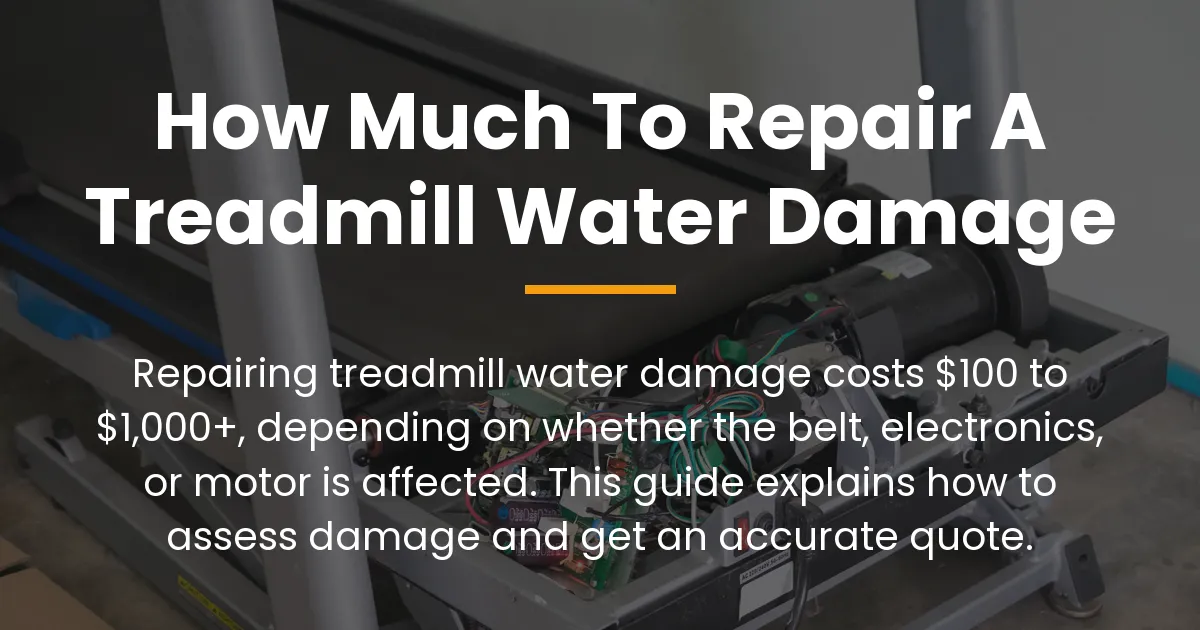
You hear a splash or find a puddle. Water has reached your treadmill. Your first thought is likely a simple question about money. You want to know how much to repair a treadmill water damage. The direct answer is between one hundred and over a thousand dollars. But that number alone is not helpful.
The true cost depends entirely on what the water touched inside your machine. A small spill on the belt is very different from a basement flood that reaches the motor. This guide will walk you through that exact difference. We will start with what you must do right now. Then, you will learn how to see what is damaged. Finally, you will get the cost details to make a smart choice.
Immediate Steps After Water Exposure
Your actions in the first few minutes can save you money or cause more harm. Do not panic. Follow these steps in order.
Why You Must Unplug and Wait
The most important step is to unplug the treadmill from the wall outlet. Do not just turn it off with the button. Pull the plug completely. Water and electricity are a dangerous mix. They can cause a short circuit, destroying delicate electronics. They can also cause a shock hazard.
After unplugging, do not plug it back in to “see if it works.” This is the biggest mistake. Power running through wet circuits will almost certainly fry the control boards. Your goal now is to dry the machine, not test it. Plan to leave it unplugged for at least 48 to 72 hours in a dry, warm space.
How to Safely Check for Damage
Once the machine is safe and unplugged, you can look for signs of water. Move the treadmill to a dry area if you can. Wipe any visible water from the belt, deck, and console with a dry towel.
Look for a visible water line on the frame or motor cover, like the ring left in a bathtub. Check for mineral residue or dirt that was in the water. Listen for any sloshing sounds if a lot of water got inside the motor housing. This initial look gives you your first clue about how deep the water went.
Taking Photos for Quotes and Insurance
Use your phone to take clear pictures. Photograph the whole treadmill and the area where it was sitting. Take close-up shots of any water lines, residue, or pooled water.
If you feel comfortable, carefully remove the motor hood (this usually involves a few screws). Take pictures inside, focusing on the motor, circuit boards, and wires. These photos are vital. They will help a repair technician give you a better quote without a first visit. They are also proof for a possible home insurance claim.
Your Treadmill’s Three Flood Damage Zones
Not all water damage is the same. Think of your treadmill in three zones, from the surface to the core. Where the water stopped tells you what might be broken and how much it will cost to fix.
Zone 1 The Belt and Deck Surface
This is surface-level damage. It happens from a spilled water bottle or a small leak above the machine. The water only touches the walking belt and the deck underneath it.
The symptoms are simple. The belt may squeak, slip, or feel sticky. The deck itself might warp or swell. The good news is that this is often a do-it-yourself fix. The cost is usually for parts only. A new belt might cost between fifty and two hundred dollars. A new deck can range from one hundred to three hundred dollars. If only this zone is wet, your repair bill will likely be on the lower end.
Zone 2 Electronics and Control Boards
This is critical damage. It happens when water rises enough to reach the console or seeps into the base where the electronics are. This zone houses the brain of your treadmill.
The key parts here are the power board and the motor controller. The power board takes electricity from your wall and distributes it. The motor controller tells the motor how fast to go. When water hits these, they short out.
Symptoms include the treadmill having no power at all. It might turn on but then show an error code and stop. You might smell a burnt electronics odor. Repairing this zone is almost always a job for a professional. The parts themselves can cost from one hundred and fifty to over five hundred dollars. Then you must add labor. This is where costs start to climb seriously.
Zone 3 The Drive Motor Core
This is the most severe and costly damage. It occurs in deep floods where water sits in the bottom of the treadmill frame, submerging the motor. The motor is the heavy, cylindrical part that drives the belt.
Water can ruin the motor’s internal wiring and bearings. Symptoms are a loud grinding or humming noise, a burning smell from the motor, or a complete failure to start even with power. Sometimes, the motor will try to turn but cannot move the belt.
A new motor is expensive, often costing between three hundred and eight hundred dollars for the part alone. Replacing it requires significant labor and expertise. When the motor is damaged, the total repair cost frequently exceeds one thousand dollars. This is the point where buying a new treadmill often makes more sense.
What Shapes the Repair Bill
Now you understand the zones. Let us look at what makes the final price high or low. Several factors change the number on your quote.
Parts The Biggest Variable
The part that needs replacement is the main cost driver. Here is a realistic range for common parts in 2025. Remember, premium brands like NordicTrack or Life Fitness have more expensive parts than generic store brands.
A new walking belt costs between $70 and $250. A replacement deck is $100 to $400. A new motor controller board ranges from $150 to $600. A new drive motor is $300 to $800 or more. These are just for the parts, sitting in a box.
Labor and Expertise
A skilled technician must install these parts. Labor rates vary by region but often range from $75 to $150 per hour. A simple belt and deck replacement might take one to two hours. Diagnosing and replacing a control board could take two to three hours.
Most repair shops also charge a separate diagnostic or service call fee. This fee, often $50 to $100, covers their time to figure out what is wrong. This fee is usually applied to the total repair cost if you hire them to do the work. Always ask about this fee when you call.
Your Location and Treadmill Brand
Where you live matters. Labor costs are higher in big cities like New York or San Francisco than in rural areas. Finding a technician who specializes in treadmills, not just general appliances, is also easier in a city.
Your treadmill’s brand and age are huge factors. A ten-year-old treadmill from a company that is no longer in business may have no available parts. Even if parts exist, they can be very expensive. A newer, high-end model is often worth repairing. An old, basic model rarely is.
Hidden Costs and Long-Term Risks
A simple quote for a part does not tell the whole story. Water damage can create problems that show up much later.
The Corrosion Time Bomb
Water causes rust and corrosion on metal parts and circuit boards. You might dry the machine, replace one burned-out board, and it works for a month. Then, a corroded wire or connector fails. This hidden damage can lead to a second, unexpected repair bill down the road.
A professional technician will check for this during their diagnosis. A do-it-yourself repair might miss it. This is a risk you take when you choose the cheaper fix yourself.
The Cost of a Wrong Do-It-Yourself Attempt
If you try to fix it yourself and make a mistake, you can make the problem worse. Stripping a screw, disconnecting the wrong wire, or incorrectly installing a board can turn a small repair into a large one.
If you then call a professional, they must first fix your mistake. This adds to their labor time and your final cost. In some cases, they may even refuse to work on a machine that has been badly taken apart.
The Value of a Professional Diagnosis
Paying a diagnostic fee can seem like a waste. But it can save you money. A good technician can give you a full picture. They can tell you if just one part is bad or if corrosion will likely cause another failure soon.
This information lets you make a truly informed choice. Is it worth spending $500 now if another $300 repair is likely in six months? Sometimes, the best service a professional provides is telling you not to repair the machine at all.
Deciding to Repair or Replace Your Treadmill
You have assessed the damage and maybe have a quote. Now comes the big choice. Use this simple framework to decide.
The Financial Rule of Thumb
A common rule is to repair if the cost is less than half the price of a comparable new treadmill. For example, if a similar new model costs $1,200, a repair over $600 is hard to justify. Compare your repair quote to the current value of your used treadmill, not what you paid for it years ago.
Check online marketplaces to see what your exact model sells for used in working condition. This gives you a real number for comparison.
The Age and History Factor
Age is critical. Treadmills have a typical lifespan. A high-quality treadmill can last over ten years with good care. A cheaper model may only last five to seven.
If your treadmill is already eight years old and needs a $700 motor repair, replacement is usually smarter. You are investing in an old machine that is near the end of its life. Other parts, like belts and bearings, will start to wear out soon too.
Personal Skill and Tool Assessment
Be honest about your skills. Replacing a belt is like changing a tire. It needs basic tools and careful following of instructions. Replacing a circuit board is like minor computer surgery. It needs precision and understanding of wiring.
Do you have the right tools? A set of screwdrivers and wrenches is enough for a belt. For electronics, you may need a multimeter to test wires and connections. If the thought of opening the motor hood makes you nervous, the do-it-yourself path is not for you.
Finding and Working with a Repair Technician
If you choose professional repair, finding the right person is key. You do not want a general handyman.
Where to Look
Search for “fitness equipment repair” or “treadmill repair service” in your area. Check the websites of local treadmill sellers, as they often have a service department. Look for technicians who are authorized to work on your brand.
Read reviews carefully. Look for mentions of water damage, electronics repair, and fair pricing. Avoid services that only offer vague promises without details.
Questions to Ask
When you call, be ready with your photos and information. Ask specific questions. “Do you have experience repairing water-damaged treadmills?” is a great start.
Ask, “What is your diagnostic fee, and does it apply to the repair cost?” Ask, “Can you give me a quote range based on the photos I send?” A good technician will ask you many questions about what happened and what the treadmill does now.
Understanding the Quote
A proper quote or estimate should list parts, labor, and the diagnostic fee separately. It should specify if the parts are new or refurbished. It should also state any warranty on the parts and labor.
Do not accept a verbal “probably around” number. Get it in writing via email. This protects you and ensures you both agree on what the work includes before it starts.
Frequently Asked Questions
Will my homeowner’s insurance cover treadmill water damage?
It might, but it depends on your policy and the cause. If the damage came from a sudden, covered event like a burst pipe or storm flooding, you may have a claim. If it was from a slow leak or a spilled drink, it likely will not. You must call your insurance agent. Have your policy number and the photos you took ready to send them.
The treadmill turns on but errors out. Does that mean the damage is minor?
Not necessarily. This is a classic sign of damage in Zone 2, the electronics. The machine has enough power to start its self-check but then finds a fault in a wet or shorted control board. This often means an expensive repair is needed. Do not assume it is a small problem.
How long after water exposure can corrosion cause a failure?
Corrosion is a slow process. A problem from rust or corroded connectors can show up weeks or even months after the machine has dried out and seems to work fine. This is why a full professional inspection after water exposure is a good idea, even if the treadmill seems okay after drying.
Where do I find a technician for treadmill electronics?
Look for specialists, not generalists. Search online for “treadmill circuit board repair” or “fitness equipment electronic repair.” Some companies even offer mail-in service for your motor controller or power board. They can test and repair your specific board, which can be cheaper than buying new.
Can I use a hairdryer or rice to dry the internal components?
Do not use a hairdryer on a high heat setting inside the treadmill. The intense heat can melt plastic wires and connectors. If you use air, only use a fan on a cool setting or compressed air designed for electronics.
The “rice trick” for phones does not work for large treadmill parts. For circuit boards, some technicians use high-percentage isopropyl alcohol and a soft brush to displace water, followed by several days of air drying. This is a skilled task. For the motor, only complete disassembly and drying by a professional is safe.
Is it safe to try a battery to test the motor?
Some online guides suggest using a 12-18 volt DC battery, like from a cordless drill, to test a treadmill motor directly. This is a highly technical diagnostic step. If done wrong, you can damage the motor further or cause injury. This test completely bypasses all the machine’s safety electronics. It is not recommended for anyone who is not a trained technician with a clear understanding of the motor’s wiring.
My treadmill was in a basement flood. Is it worth repairing?
Start with the damage zone assessment. If water only touched the belt (Zone 1), likely yes. If the water level rose above the motor and electronics (Zones 2 and 3), the cost will be high. For an older treadmill, the answer is often no. The combination of part costs, labor, and future corrosion risk makes replacement the better financial choice after severe flooding.
Conclusion
Finding out how much to repair a treadmill water damage starts with your own detective work. You must know where the water went. The cost moves from a simple belt change to a major motor replacement based on that fact.
Use the three-zone method to check your machine. Get quotes from specialists who understand the hidden risks of corrosion. Then, weigh the repair price against the age and value of your treadmill. This process turns a moment of panic into a clear, smart decision. You will know if fixing your machine is the right move or if it is time for a new start.