Learning how to do sprints on a treadmill is a fantastic way to build fitness, burn calories, and improve speed, all without needing a track or dealing with bad weather. However, doing it correctly requires more than just running fast for a few seconds; it demands an understanding of safety, proper form, and smart planning to avoid injury and see real progress.
This guide will take you from complete beginner to confident sprinter, covering everything you need to know before you even step on the machine, how to execute your first session safely, and how to build your workouts over time for lasting results.
Preparing for Treadmill Sprint Workouts
Jumping straight into high-speed intervals is a common mistake that leads to frustration or injury. The first step is making sure you and your equipment are ready for the intense demands of sprinting.
Assessing Your Readiness
You need a solid fitness base before adding treadmill sprints to your routine. If you are new to running, you should first be comfortable with steady-paced jogs for at least 20-30 minutes a few times a week.
This builds the cardiovascular foundation and leg durability needed for intense intervals. It is also wise to have a background in basic strength training, particularly for your legs and core.
Exercises like squats and lunges strengthen the muscles and joints that will absorb the high impact of sprinting, making you more resilient and helping you maintain good form when you are tired.
Essential Gear and Treadmill Setup
Never attempt sprints in casual shoes or barefoot. You must wear proper running shoes with good cushioning and support to handle the forceful landing of each stride.
Before you start, always attach the safety clip to your clothing. This clip will stop the treadmill belt instantly if you fall or drift too far back, preventing a serious accident. Familiarize yourself with the emergency stop button and the speed controls, so you can make adjustments quickly and without panic.
How Treadmill Sprinting Differs from Outdoor Sprints
Understanding this difference is crucial for safety and setting realistic expectations. When you sprint on the ground, you propel yourself forward by pushing against the earth.
On a treadmill, the moving belt comes to you, which means the machine does some of the work. This changes how your muscles are used and can make it feel easier to achieve a certain speed compared to outside.
More importantly, a treadmill has a fixed maximum speed. On the ground, you can slow yourself down naturally. On a treadmill, if you set the speed too high and cannot keep up, you risk being thrown off the back. This is why starting conservatively is non-negotiable.
How to Do Sprints on a Treadmill
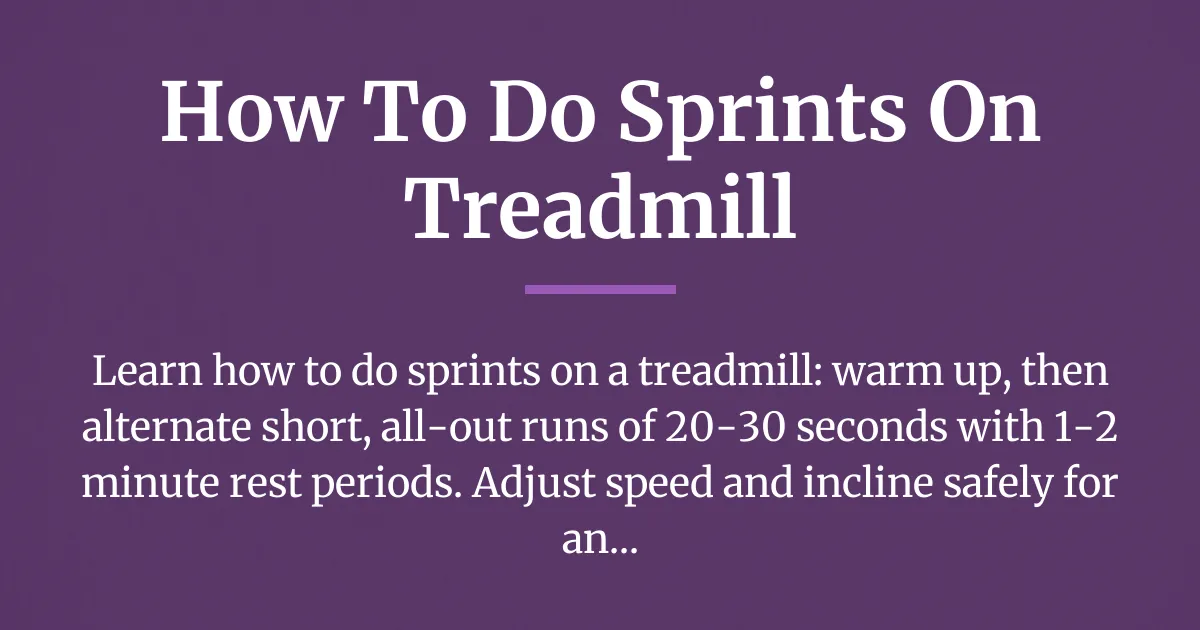
The core method for how to do sprints on a treadmill is High-Intensity Interval Training (HIIT), which alternates short bursts of maximum effort with longer periods of active recovery. A safe and effective beginner session involves sprinting for 20-30 seconds followed by 1-2 minutes of walking or slow jogging, repeated 6-8 times after a thorough warm-up.
The Non-Negotiable Warm-Up Phase
Never skip your warm-up. Begin by walking at a comfortable pace for 3-5 minutes to get your blood flowing. Then, perform dynamic stretches like leg swings, high knees, and butt kicks for another 3-5 minutes to prepare your muscles for explosive movement.
Finally, ramp up the intensity gradually. Jog at a moderate pace for 2-3 minutes, then do a few short, gentle accelerations where you run faster for just 5-10 seconds. This whole process should take about 10-15 minutes and leave you feeling warm and ready, not exhausted.
Setting Your Sprint and Recovery Parameters
Do not guess your sprint speed. Start by finding a fast but manageable pace. A good rule is to choose a speed that feels like an 8 or 9 out of 10 effort, where speaking full sentences is impossible.
For most people, this is not the absolute top speed the treadmill can do. Your recovery period should be at least three times longer than your sprint. For a 30-second sprint, plan for 90 seconds to 2 minutes of walking or very light jogging. This extended rest allows your heart rate to come down sufficiently so you can give maximum effort on the next sprint.
Step-by-Step Interval Execution
- Start your recovery pace. Begin by walking or jogging slowly on the treadmill to establish your baseline.
- Increase the speed for your sprint. Press the speed buttons to quickly increase to your predetermined sprint pace. Stand on the side rails if necessary, then carefully step onto the moving belt.
- Focus on your form. Lean slightly forward from the ankles, not the waist. Pump your arms vigorously to drive your legs, and aim for a quick, light foot strike under your body, not out in front.
- Hold the sprint for the entire duration, usually 20 to 30 seconds. Breathe deeply and focus on maintaining your technique as you fatigue.
- Decrease speed for recovery. As the sprint time ends, safely reduce the speed back to your slow walking pace. Actively recover by keeping your legs moving; do not just stand on the sides.
- Repeat the cycle. Complete your desired number of intervals, typically starting with 4 to 6 for your first few sessions.
The Critical Cool-Down Protocol
After your last interval, do not stop abruptly. Lower the speed to a slow walk for 3-5 minutes to let your heart rate descend gradually. This helps prevent dizziness and clears metabolic waste from your muscles.
Once you are off the treadmill, perform static stretches, holding each for 20-30 seconds. Focus on your calves, hamstrings, quadriceps, and hip flexors. This cool-down phase aids recovery and reduces muscle stiffness in the following days.
Adapting Your Sprint Workout Over Time
Your body adapts quickly, so doing the same workout every week will lead to a plateau. To keep improving, you need a plan to make your sessions more challenging in a controlled way.
When and How to Increase Intensity
Only change one variable at a time, and only after you can complete your current workout comfortably for two or three sessions in a row. You can increase the sprint speed by 0.5 to 1 kilometer per hour, or you can add a slight incline of 1-2% to simulate hill sprints and engage more muscle.
Another option is to shorten your rest period by 15-30 seconds, which increases the workout’s overall intensity. Alternatively, you can add one more sprint interval to the session to increase the total volume.
Structuring a Weekly and Monthly Plan
Treadmill sprints are very demanding, so limit them to one or two times per week, with at least 48 hours of rest or light activity between sessions. On other days, focus on steady-state cardio, strength training, or active recovery.
Over a month, you might follow a simple progression. Week 1: 6 intervals of 20-second sprints with 2-minute rests. Week 2: 6 intervals of 25-second sprints. Week 3: 7 intervals of 25-second sprints. Week 4: a deload week with easier, shorter sessions to allow for full recovery before starting a new cycle.
Translating Treadmill Gains to Outdoor Performance
While treadmill sprints improve cardiovascular fitness and leg turnover, they lack the specific forward propulsion training of outdoor running. To bridge this gap, incorporate exercises like sled pushes, hill sprints on solid ground, or plyometrics like bounding into your strength workouts.
You can test your improved fitness by timing yourself on a short outdoor run or noticing how much easier your regular running pace feels. This translation confirms that your treadmill work is building real-world speed and endurance.
Frequently Asked Questions
Can you get the same benefits from treadmill sprints as from track sprints?
You get similar cardiovascular and calorie-burning benefits, but not identical muscular ones. Treadmill sprints are excellent for heart health and leg speed, but track sprints better develop the powerful forward-driving muscles since you have to propel your entire body mass against resistance.
What is a safe maximum speed for sprinting on a treadmill?
There is no universal safe speed; it depends entirely on your fitness and experience. Never sprint at the treadmill’s maximum setting. Your safe top speed is the fastest pace you can maintain with perfect control and form for the entire interval without feeling like you are at risk of falling.
Is it better to increase speed or incline for a harder workout?
Both are effective, but they stress the body differently. Increasing speed challenges pure leg turnover and cardiovascular capacity more. Adding incline, even just 1-3%, mimics hill running, engaging your glutes and hamstrings more intensely and can be a safer way to increase difficulty without reaching dangerously high belt speeds.
Can I do treadmill sprints if I’m a beginner to running?
It is not recommended. Beginners should first build a base of 4-6 weeks of consistent jogging or walking to strengthen joints and connective tissues. Starting with incline walks or very short, gentle intervals is a safer introduction to higher intensity before attempting all-out sprints.
How should my running form differ on a treadmill during a sprint?
Your form should be largely the same, but with extra focus on staying centered on the belt. Avoid looking down at your feet, as this causes you to lean forward. Keep your gaze ahead, take slightly shorter, quicker strides than you might outdoors, and be mindful not to drift toward the back of the machine where the belt disappears.
Is it safe to do treadmill sprints barefoot or in minimalist shoes?
No, it is not safe. The repetitive, high-impact force of sprinting requires the cushioning and support of proper running shoes to protect your feet, ankles, and knees from stress injuries. Barefoot or minimalist training on a treadmill significantly increases the risk of injury.
Why do I feel unsteady or bounce when I try to sprint on the treadmill?
This usually means your speed is too high for your current ability, or your core is not engaged. You are likely over-striding or pushing off too vertically. Lower the speed, focus on taking quick, light steps, and tighten your abdominal muscles to stabilize your torso and reduce excessive up-and-down movement.
Can I use the pre-set “Interval” or “HIIT” programs on my treadmill for this?
You can, but with caution. These programs are a convenient starting point. However, you must first preview the settings to ensure the proposed sprint speeds and rest periods align with your fitness level. It is often better to manually control the intervals so you can listen to your body and adjust in real time.
How soon after a treadmill sprint workout should I feel sore?
It is common to feel muscle soreness 24 to 48 hours after your workout, especially when you are new to this type of training. This delayed onset muscle soreness (DOMS) is normal. If you feel sharp pain during the workout or immediate joint pain, you should stop and rest, as that indicates potential injury.
What are the signs I should stop a sprint interval immediately?
Stop at once if you feel a sharp, stabbing pain anywhere, if you become dizzy or lightheaded, if you lose control of your form and start stumbling, or if you cannot breathe properly. Your safety is always more important than finishing the interval. Use the safety clip or stop button immediately.
Conclusion
Mastering how to do sprints on a treadmill is about combining smart preparation with disciplined execution and thoughtful progression. By respecting the machine’s unique demands, starting at a level that matches your fitness, and gradually challenging yourself over weeks, you can harness this powerful workout to dramatically boost your endurance, power, and overall health safely and effectively.