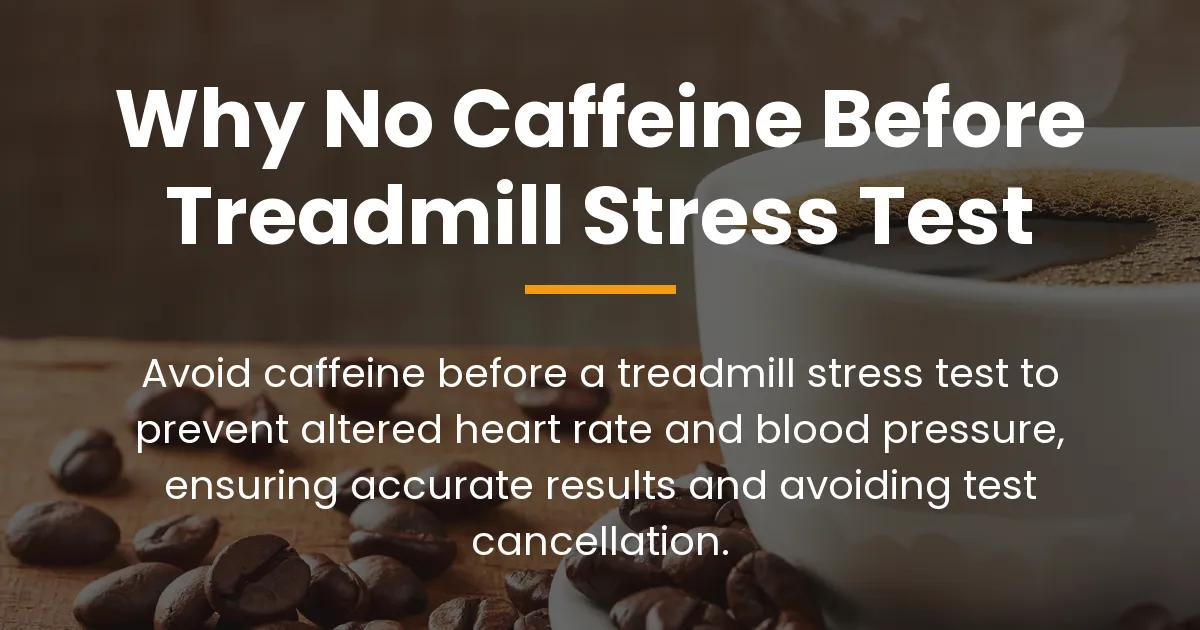
If your doctor orders a treadmill stress test, you will hear the rule: avoid caffeine. You might ask, “why no caffeine before treadmill stress test?” The answer is simple but vital. Caffeine changes how your heart beats and how your blood flows. These changes can make the test results wrong or unclear. Your doctor needs to see how your heart handles exercise alone. By skipping caffeine, you help get a true picture of your heart health. This helps diagnose problems like coronary artery disease correctly.
Why No Caffeine Before Treadmill Stress Test is Essential
Caffeine is a common stimulant in drinks like coffee and tea. It affects your body quickly after you consume it. Your heart rate goes up, meaning your heart beats faster. Your blood pressure also rises. These changes happen even when you are sitting still or resting.
For a stress test, doctors check your heart rate and blood pressure at rest first. These numbers are your baseline. If caffeine has raised this baseline, the starting point is not true. This makes it hard to see the real effect of exercise on your heart.
Caffeine can also cause small irregular heartbeats. These might look like signs of heart disease during the test. By avoiding caffeine, you give your doctor a clean slate. They can accurately see how your heart responds to physical stress. This leads to reliable results and proper care.
How Caffeine Changes Your Heart’s Baseline
Caffeine works by blocking adenosine in your body. Adenosine is a chemical that helps you relax and sleep. When caffeine blocks it, your body becomes more alert. This triggers the release of adrenaline, a hormone that prepares you for action.
Adrenaline makes your heart pump faster. This increases your resting heart rate. Even without exercise, your heart is working harder than normal. Caffeine also tightens your blood vessels slightly. This raises your blood pressure at rest.
During a treadmill stress test, doctors use your resting heart rate and blood pressure as a reference. They compare these numbers to your levels during exercise. If caffeine has altered the resting numbers, the comparison is flawed. The exercise increase adds on top of an already high baseline. This can hide true heart issues or create false ones.
Your target heart rate during the test is based on your age and resting heart rate. If caffeine has inflated your resting heart rate, the target might be set incorrectly. You might not exercise enough to stress your heart properly. Or you might overexert yourself based on wrong calculations.
Caffeine can cause symptoms like chest discomfort or palpitations. These can be mistaken for angina, a sign of coronary artery disease. This could lead to a false positive, where you are diagnosed with a heart problem you do not have. Conversely, caffeine might mask real symptoms, leading to a false negative where heart disease is missed. Avoiding caffeine ensures that all symptoms during the test are due to exercise, not stimulants.
Caffeine’s Two-Fold Threat to Stress Testing
Caffeine poses two main risks for stress tests. First, it interferes with the treadmill test itself. Second, it can ruin a chemical stress test if one is needed. Understanding both explains why the rule is so strict.
Impact on the Treadmill Test
In a treadmill test, you walk on a moving belt while your heart is monitored. Doctors watch your heart rate, blood pressure, and heart’s electrical activity. They also look for symptoms like chest pain or shortness of breath.
Caffeine alters your resting heart rate and blood pressure. This skews the starting point for all measurements. The increase during exercise is added to an already elevated level. This can make it seem like your heart is under more stress than it truly is. Or it might hide the real stress your heart is under.
Doctors use the test to see how well your coronary arteries supply blood to your heart muscle. If caffeine has changed your baseline, the results may not show true blood flow issues. This can affect the accuracy of diagnosing coronary artery disease. The test might indicate a problem where none exists, or miss a problem that is there.
Impact on a Chemical Stress Test
Some people cannot exercise on a treadmill due to health issues. For them, a chemical stress test is used. This test involves a medication like adenosine injected into your bloodstream. Adenosine mimics exercise by widening coronary arteries and increasing blood flow.
Caffeine chemically blocks the receptors that adenosine needs to work. If you have caffeine in your system, the adenosine will not be effective. The test cannot simulate exercise stress properly. Images taken during the test, such as in myocardial perfusion imaging, will not show accurate blood flow patterns.
As a result, the test would be canceled or postponed. This causes procedural delays and requires you to prepare again. Even if you are scheduled for a treadmill test, doctors might switch to a chemical test during the procedure. For example, if you have trouble walking, a chemical agent might be used instead. Having caffeine in your system would ruin this backup plan. So, avoiding caffeine prepares you for any type of stress test.
What Counts as Caffeine Before Your Test
To follow the no-caffeine rule, you need to know what products contain caffeine. Caffeine is in many everyday items beyond coffee. Being aware helps you avoid accidental consumption.
Common caffeinated drinks include coffee, tea, soda, and energy drinks. Coffee means all types, like espresso, latte, and instant coffee. Tea includes black, green, white, and oolong teas. Herbal teas like peppermint or chamomile are usually caffeine-free, but always check the label.
Sodas like cola and some orange or root beers have caffeine. Energy drinks are high in caffeine and other stimulants. They must be avoided completely before a stress test.
Foods like chocolate and cocoa products contain caffeine. Dark chocolate has more caffeine than milk chocolate. Some desserts, ice creams, or snacks might include chocolate or coffee flavors.
Medications and supplements can be hidden sources. Some pain relievers, especially for headaches, include caffeine to boost effectiveness. Weight loss supplements and pre-workout formulas often contain caffeine. Always read the ingredient list on any pill or powder you take.
Decaffeinated products are not completely caffeine-free. Decaf coffee and tea undergo a process to remove most caffeine, but trace amounts remain. For a stress test, these trace amounts can be problematic. The tests are sensitive to even small quantities of caffeine. In pharmacological tests, trace caffeine can block adenosine receptors enough to affect results.
Therefore, avoid decaf coffee, decaf tea, and any product labeled caffeine-free if it might have residuals. Stick to beverages that are naturally caffeine-free. Water is the safest choice. Clear fruit juices like apple or grape juice are acceptable if they have no added stimulants. Herbal teas verified to be caffeine-free are also fine.
On the day before your test, plan your drinks carefully. If you usually drink coffee in the morning, switch to water or herbal tea. Avoid any product you are unsure about. When in doubt, skip it and choose a known safe alternative.
Consequences of Caffeine Before Your Stress Test
Ignoring the no-caffeine rule can lead to serious outcomes. The most immediate consequence is test cancellation. This happens because caffeine compromises the validity of the results.
Test rescheduling is inconvenient and time-consuming. You will need to fast and avoid caffeine for another 24 hours. This might conflict with your schedule and cause delays in diagnosis. Repeated preparations can be stressful and burdensome.
Scientifically, caffeine consumption skews the data. Even if the test proceeds, the readings might not be accurate. Your heart rate and blood pressure could be elevated beyond the normal exercise response. This might lead to a false positive, suggesting heart disease where none exists. Alternatively, it could cause a false negative, where real heart problems are masked.
Inaccurate results can affect your treatment plan. You might be prescribed medications or procedures you do not need. Or, necessary treatments might be delayed. This poses a risk to your long-term health.
It is crucial to inform the technician if you have consumed caffeine. Be honest about any mistakes. The technician might reschedule the test to ensure accuracy. Sometimes, if the caffeine dose was small and long before, they might proceed with caution. But this decision is based on medical judgment.
Full disclosure helps avoid potential harm. It ensures that your healthcare provider has all the information to make safe decisions. Your cooperation is key to a successful and meaningful stress test.
Preparing for an Accurate Stress Test
Proper preparation makes your stress test more effective and comfortable. Follow these steps to get ready for your appointment.
- Adhere to the 24-hour caffeine-free window. This means no caffeine for a full day before your test. Set a reminder on your phone or calendar. Start from the morning of the day before your test. Avoid all sources of caffeine as listed earlier.
- Manage your medications. Some drugs, like beta blockers, can affect heart rate and blood pressure. Your doctor might ask you to stop taking them before the test. Always follow your doctor’s instructions. Do not change your medication schedule without consulting them. If you have diabetes, discuss how to manage blood sugar levels during fasting.
- Choose appropriate clothing. Wear comfortable clothes that allow easy movement. Athletic wear like a t-shirt and shorts or leggings is ideal. Shoes should be supportive sneakers suitable for walking or running. Avoid tight or restrictive clothing that might interfere with exercise or electrode placement.
- Follow dietary guidelines. You may be asked to fast for 4 to 12 hours before the test, especially if imaging is involved. If eating is allowed, have a light meal a few hours before. Avoid heavy, greasy, or spicy foods that could cause discomfort. Stay hydrated with water, but do not overdrink right before the test.
- Arrive at the stress lab on time. Bring a list of your current medications and any relevant medical records. Inform the staff about any symptoms you have experienced, such as chest pain, dizziness, or shortness of breath. Also, mention if you have any physical limitations that might affect your ability to walk on the treadmill.
During the test, you will be connected to an ECG machine to monitor your heart’s electrical activity. You will start walking slowly on the treadmill. The speed and incline will gradually increase. Continue until you reach your target heart rate or experience symptoms. The technician will guide you throughout the process.
After the test, you might be monitored for a short time. You can usually resume normal activities unless advised otherwise. Drink water to rehydrate and eat a light snack if you fasted. Your doctor will discuss the results with you in a follow-up appointment.
Frequently Asked Questions
Can I drink decaffeinated coffee before a stress test?
No, you should avoid decaffeinated coffee. Decaf products contain trace amounts of caffeine that can interfere with the test’s accuracy, especially for chemical stress tests.
What happens if I accidentally consume caffeine before my appointment?
Inform the technician immediately. They will likely reschedule your test to ensure reliable results. Proceeding with caffeine in your system could lead to inaccurate data.
How many hours before a stress test is it safe to stop caffeine?
It is safest to avoid caffeine for 24 hours before the test. Some sources recommend 12 hours, but a full day ensures all caffeine is metabolized and out of your system.
Does the caffeine rule apply to all types of stress tests?
Yes, the rule applies to both treadmill and chemical stress tests. Caffeine can skew results in various ways, so it is a standard precaution for all cardiac stress testing.
Can I take my regular medications if they contain caffeine?
Consult your doctor. They may advise you to skip caffeine-containing medications before the test or provide alternatives. Never stop prescribed medications without medical advice.
Why is water allowed but not other clear liquids?
Water is pure and does not contain caffeine or other stimulants. Other clear liquids, like some teas or sodas, may have caffeine, so they are not allowed unless verified caffeine-free.
Will one cup of coffee the morning of definitely ruin my test?
Yes, even one cup can significantly elevate your heart rate and blood pressure. To avoid any risk, it is best to have no caffeine at all before the test.
If I avoid caffeine, will my test be more accurate?
Absolutely. Avoiding caffeine ensures that your heart’s response is solely to exercise, leading to precise baseline measurements and dependable results for diagnosing heart conditions.
What should I drink instead on the morning of the test?
Drink water or caffeine-free herbal teas like peppermint or chamomile. Clear fruit juices without added stimulants are also safe, but avoid those with caffeine or other additives.
Are energy drinks treated the same as coffee for a stress test?
Yes, energy drinks contain high levels of caffeine and other stimulants. They must be avoided just like coffee, tea, and soda before a stress test.
Conclusion
Understanding why no caffeine before treadmill stress test is required helps you take control of your health. This rule ensures that your heart’s response during the test is pure and accurate. Caffeine can alter key metrics like heart rate and blood pressure, leading to misleading results. By following the no-caffeine guideline, you contribute to a correct diagnosis and effective treatment plan. Your cooperation makes the stress test a valuable tool for assessing your heart health. Always adhere to preparation instructions for the best outcome.