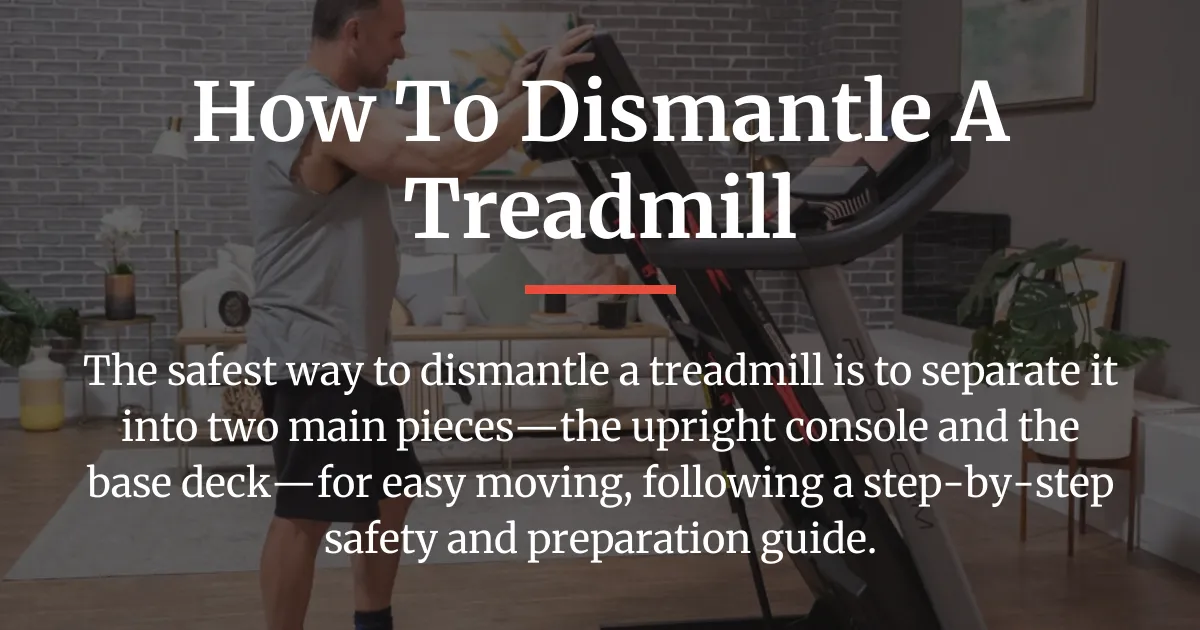
If you need to move your treadmill to another room or a new home, learning how to dismantle a treadmill is essential to avoid damage and navigate tight spaces. The safest method involves reducing it into two main pieces: the upright console assembly and the base deck. This guide will walk you through a complete, strategic approach from preparation to packing, ensuring you handle the task safely and efficiently.
Prepare Your Workspace and Mindset
Success in dismantling a treadmill depends more on careful preparation than raw strength. Before touching any bolts, you must adopt a safety-first mindset and set up your environment to prevent accidents or damage to the machine. This phase is about controlling what you can ahead of time, so the actual disassembly goes smoothly.
The Essential Safety Protocol
Begin with a non-negotiable safety checklist that goes beyond simply unplugging the treadmill. First, remove the safety key to ensure the console is completely dead. Then, unplug the power cord from the wall outlet and wait at least 30 minutes. This waiting period allows any stored electrical charge in the motor capacitors to dissipate, preventing a potential shock.
Clear a large, soft area on the floor where you can lay down parts, using moving blankets or cardboard to protect both the treadmill and your flooring. Always assume that parts are heavier than they look, and plan your moves to avoid sudden strain or drops. This foundational step mitigates risk before you even pick up a tool.
Gather Your Tools Beyond the Basics
While most guides list basic tools like a Phillips head screwdriver and hex wrenches, effective disassembly requires thinking ahead. You should absolutely have a power drill with a clutch setting to avoid stripping screw heads, and a socket set for the larger bolts. The manufacturer-provided Allen keys are often flimsy, so use a sturdy multi-bit set instead.
Beyond these, gather several often-forgotten items that make the job easier. A magnetic parts bowl keeps screws and bolts from rolling away, and zip-ties are perfect for bundling loose wires. Painter’s tape and a marker are crucial for labeling parts and bags, while a digital camera or phone is necessary to photograph connections before you disconnect them.
Locate Your Treadmill’s Manual or Its Digital Twin
If you have lost the physical user manual, do not start the disassembly process without finding a digital copy. Look for the model number on a sticker typically placed near the power cord base or on the underside of the deck. Search for this number online along with the brand name, such as Proform, Sole, or NordicTrack, to download a PDF manual from the manufacturer’s website.
This manual provides the exact number and type of fasteners for your specific model, which is invaluable. It may also include exploded diagrams showing how parts fit together, giving you a roadmap for both taking apart and later reassembling the treadmill correctly. This step saves immense frustration later.
Understand Universal Treadmill Anatomy
All treadmills, from a Sole F63 to a NordicTrack model, share a common basic structure that you need to understand before disassembly. Knowing this anatomy helps you identify what to remove and what to leave alone, turning a confusing machine into a logical puzzle. The goal is to see the treadmill not as a monolithic unit, but as interconnected assemblies.
The Two Major Assemblies
Every treadmill consists of two primary sections you will separate. The upper console includes the display screen, control buttons, handrails, and the upright metal supports that hold them all. The base deck, or main frame, is the large apparatus that houses the motor, the long running surface belt, rollers, and the entire weight-bearing structure.
Recognizing these two pieces is the key to the entire process. Your disassembly aim is not to reduce the treadmill to individual pieces like screws and plastic panels, but to cleanly divide it into these two manageable chunks. This approach is the only way to move it through doorways without causing damage or injury.
Connection Point Mapping
These two major assemblies connect at specific, predictable points. The upright supports are bolted to the base deck, usually with two to four large bolts at the bottom of each upright. Additionally, a wire harness runs from the console down through one of the uprights to plug into the motor control board located on the base deck.
Finding these connection points is your main task during disassembly. The bolts provide structural integrity, while the wire harness carries power and data for the console functions. Understanding this map means you know exactly where to focus your efforts, avoiding unnecessary removal of cosmetic parts or critical components like the motor.
The Goal of Disassembly
The objective is to disconnect the wire harness and unbolt the upright supports, thereby freeing the console assembly from the heavy base deck. This achieves the two-piece configuration that makes moving possible. You are not taking apart the motor or the internal drive belt, which are complex and rarely need removal for a simple move.
Keeping this goal in mind prevents over-disassembly, which wastes time and increases the risk of losing parts or creating reassembly headaches. By focusing on the critical connections, you work efficiently and ensure the machine can be put back together correctly in its desired location.
Execute the Systematic Disassembly Process
The safest and most effective way to dismantle a treadmill for moving is to systematically reduce it into two main pieces—the upright console assembly and the main deck/base. Follow these steps in order, adapting for your specific model as needed, to achieve this clean separation.
- Console Detachment and Wire Management
Start by removing any plastic shrouds or covers around the console and uprights using your screwdriver. Look for the main wire harness connector, which is often a large plug with multiple wires, located behind the console or at the base of an upright. Before disconnecting, take a clear photo of the plug and its socket. Press any plastic locking tab to release it, then gently pull the connector apart. Use zip-ties to secure the loose wires to the console frame, preventing them from dangling or getting pinched later. - Upright Bolts and Structural Separation
With the wires disconnected, locate the main pivot or mounting bolts that secure the uprights to the base deck. These are typically the largest bolts on the machine and require a socket wrench. Before removing the final bolt, have a helper support the weight of the console assembly to prevent it from falling. Once all bolts are out, carefully lift the console away and set it aside on a protected surface. - Isolating the Motor Deck
After the console is removed, you are left with the heavy base deck. If your treadmill has an adjustable deck angle, lower it to its flattest position to lower the center of gravity. You can also use a wrench to loosen the belt tension, but this is often unnecessary for moving. The base is now ready to be moved, though it requires at least two people to lift safely due to its weight.
Adapting Steps for Your Treadmill Brand
Different brands have design quirks that affect the disassembly process. Use this quick reference to adapt the universal steps above for common models. For Proform and NordicTrack treadmills, the wire harness often runs internally through an upright; look for a hidden access panel near the base to find the connector. These models also commonly use a single large pivot bolt per side.
Sole Fitness models, like the Sole F63, may use multiple bolts along the length of the uprights instead of just one at the base. You might need to remove the motor hood first to access some connections. For Horizon or Bowflex products, check if the console folds down, as this can change how you support it during bolt removal. Always refer to your specific manual for the exact number and location of fasteners.
Solve Common Disassembly Challenges
Even with perfect preparation, you might encounter stubborn parts or unexpected complications. Knowing how to handle these common issues keeps the process moving forward safely and prevents damage to your treadmill. This section provides practical solutions for the problems that often frustrate DIY efforts.
Dealing with Stripped or Stuck Bolts
If a bolt won’t budge, forcing it can strip the head or damage the threads. First, apply a penetrating oil like WD-40 to the bolt and let it soak for 15 minutes to loosen corrosion. Use a power drill with the clutch set to a low torque to gently try again, ensuring the screwdriver bit fits perfectly to avoid cam-out. For severely stuck bolts, an impact driver can provide sudden, jarring force that breaks the bond without twisting your wrist.
When all else fails, it may be better to leave that bolt in place and work around it, rather than risking permanent damage. Remember that some bolts, especially on older models, might be threaded into plastic inserts that can break easily. Patience and the right tool application are key here.
Managing the Heavy Motor Deck
The base deck, containing the motor and steel frame, is extremely heavy and awkward to lift. This is the step where having a helper is not just recommended but essential. Plan your lift path, ensuring you have a clear route to move the deck out of the room. Use lifting straps or handles if available, and always bend your knees to lift with your legs, not your back.
If you must move it alone, consider using furniture sliders or a dolly to roll the deck instead of carrying it. However, be cautious as the deck is not balanced for rolling and could tip. The weight of the motor deck is a big deal, so never underestimate the risk of injury during this phase.
Handling Plastic Clips and Covers
Many treadmills use plastic push-clips or snap-on covers instead of screws in some areas. Forcing these with a metal tool will almost certainly break the fragile tabs. Instead, use a set of plastic pry tools or even a stiff guitar pick to gently work around the edges and release the clips. Start at one corner and work your way around, applying steady pressure rather than a sudden jerk.
If a clip does break, don’t panic. You can often reassemble the part without it, or use a small zip-tie as a replacement fastener later. The goal is to minimize damage, as these cosmetic parts can be difficult and expensive to replace.
Pack and Label for Successful Reassembly
After dismantling the treadmill, proper packing and labeling are what separate a smooth reassembly from a confusing nightmare. This phase ensures that all parts arrive at the new location organized and protected, ready to be put back together without guesswork. Think of it as setting up your future self for success.
The Strategic Bagging Method
Do not throw all screws and bolts into one container. Instead, use separate plastic bags for hardware from each major disassembly stage. For example, put all bolts from the console shrouding in one bag labeled “Console Covers,” and the large upright pivot bolts in another bag labeled “Main Upright Bolts.” Use painter’s tape and a marker for clear, durable labels.
This method prevents the frustration of sorting through a jumble of identical-looking fasteners later. It also helps you verify during reassembly that you have reinstalled every bolt from each bag, reducing the chance of missing a critical connection. This simple habit saves a tremendous amount of time and confusion.
Document What You Did
Your photos from earlier are now invaluable. Organize them in a dedicated album on your phone, and consider taking additional pictures as you pack. Photograph the underside of the base deck, the orientation of the belt, and how the wire harness was routed. These visual records serve as a backup memory when the manual isn’t clear or you face a complex step during reassembly.
If you discovered any issues during disassembly, like a worn part or a tricky connection, jot down a note and tape it to the relevant component. Documentation turns the reassembling process from a puzzle into a straightforward reversal of your steps, making it much less daunting.
Secure the Components for Transit
Protect the dismantled pieces to prevent damage during the move. Wrap the console screen and plastic parts in moving blankets or bubble wrap, securing them with tape. For the base deck, use straps to keep the belt from shifting and to secure the deck to a dolly if you’re using one. If possible, keep the treadmill in the two main pieces during transport, as further disassembly into individual pieces increases the risk of loss or damage.
Place all your labeled bags of hardware inside a larger box or taped to one of the main components, so they don’t get lost. This careful packing ensures that everything arrives together and in good condition, ready for convenient moving and reassembly at the new location.
Frequently Asked Questions
Can I dismantle a treadmill completely by myself?
While you can handle many steps alone, having at least two people is strongly recommended for safety, especially when lifting the heavy motor deck or supporting the console during bolt removal. Attempting it solo increases the risk of injury or dropping and damaging the machine.
What is the one tool most people forget but absolutely need?
A magnetic parts bowl or tray is the most forgotten essential tool. It keeps all small bolts and screws organized and prevents them from getting lost on the floor, which can cause major delays and frustration during both disassembly and reassembly.
How do I dismantle a treadmill if I’ve lost the user manual?
Find the model number on the treadmill’s sticker and search for it online to download a PDF manual from the manufacturer’s website. If that fails, use the universal process outlined here and look for online video tutorials for your specific brand, like NordicTrack or Proform, for visual guidance.
Is dismantling a treadmill different for disposal versus moving?
Yes, for disposal, you might use destructive methods like cutting parts apart with tools, as reassembly is not needed. For moving, you must use non-destructive disassembly to keep all parts intact for future use, focusing on preserving wires, bolts, and structural integrity.
Will a moving company dismantle and reassemble my treadmill?
Most standard moving companies will not disassemble or reassemble complex appliances like treadmills due to liability and lack of expertise. You typically need to hire a specialized service or do it yourself before they arrive, and then reassemble it after the move.
How do I handle the treadmill belt and deck during disassembly?
You generally do not need to remove the belt or deck from the frame. Simply ensure the belt is centered and secure it with a strap to prevent shifting during transport. The deck, as part of the base assembly, is moved as one heavy unit with the frame.
Are there any parts I should definitely not try to remove?
Do not attempt to remove the motor, drive belt, or any permanently welded structural joints. These components are complex, difficult to reinstall correctly, and tampering with them can void warranties or render the treadmill inoperable. Focus only on the bolts and wires connecting the console to the base.
How should I pack and label the parts for easy reassembly?
Use the strategic bagging method: place hardware from each disassembly step into separate plastic bags and label them with painter’s tape. Take photos of wire connections and component orientations. Secure all bags to the main console or deck piece so nothing gets lost in transit.
What is the most common mistake people make when taking apart a treadmill?
The most common mistake is forcing a plastic wire connector instead of finding and pressing its release tab, which can break the connector and require expensive repairs. Always inspect connectors for locking mechanisms before pulling them apart.
Does dismantling my treadmill void its warranty?
It might, depending on the warranty terms. Many manufacturers void the warranty if the treadmill is disassembled by anyone other than authorized service personnel. Check your warranty document or contact the manufacturer, such as Bowflex, Sole, or Horizon, to confirm before proceeding.
By methodically applying this process, you now know how to dismantle a treadmill with confidence. The key is respecting the machine’s weight and complexity through thorough preparation and strategic disassembly. With the console and base deck separated, your treadmill is ready for convenient moving to its desired location, and your careful labeling and packing ensure the reassembling process will be straightforward and stress-free.