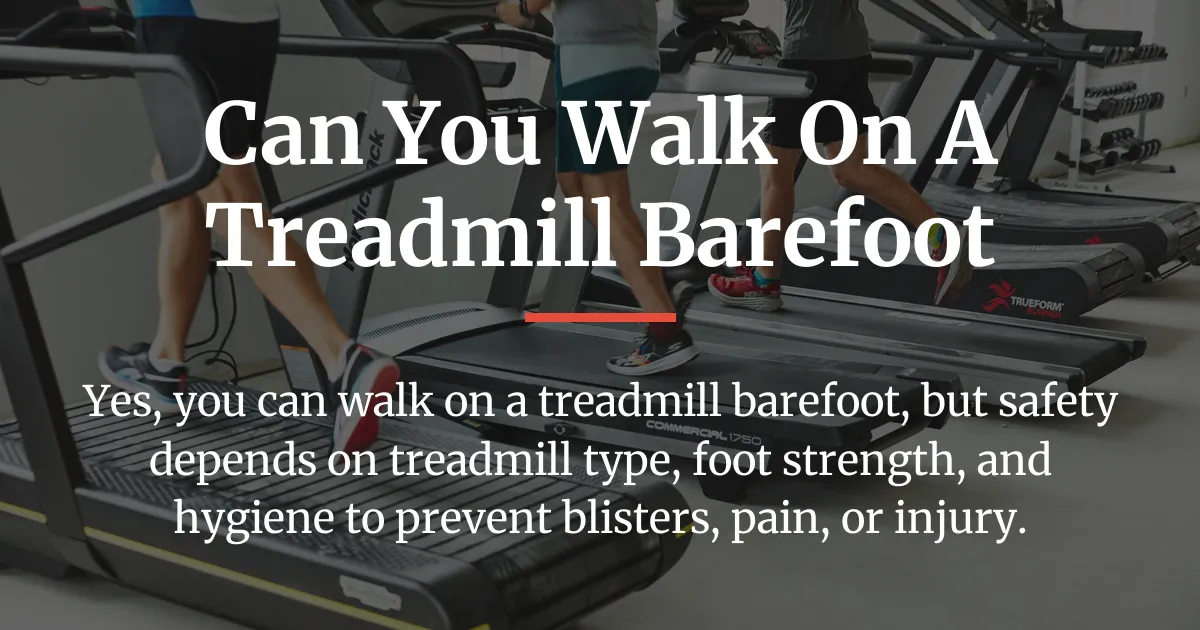
Can you walk on a treadmill barefoot? Yes, you absolutely can, but the real question is whether you should, and that answer isn’t the same for everyone. This guide cuts through the confusion to give you a clear, safe path forward, covering everything from hidden risks to a practical step-by-step plan.
Can You Walk on a Treadmill Barefoot? The Core Answer
Walking barefoot on a treadmill is physically possible, but it is not a simple yes or no decision. It is an activity with specific benefits and real dangers, where your safety hinges on the type of treadmill you use, the current strength of your feet, and how carefully you approach it. Treating it as a one-size-fits-all practice leads to the awful afterwords of pain many people report.
Reasons to Try Barefoot Treadmill Walking
People consider ditching their shoes for several reasons beyond just comfort. Understanding these goals helps you see if the benefits align with what you want.
It Can Teach Your Body a Better Walk
Modern shoes often change how we move. Walking barefoot on a treadmill provides direct sensory feedback to your feet, which can help retrain your natural gait. This means you might start landing with a softer, quieter step that reduces jarring impact through your legs. It encourages your body to use its natural shock absorption.
Your Feet Get Stronger on Their Own
When you always wear shoes, especially supportive ones, the small muscles in your feet and ankles don’t have to work hard. Walking barefoot forces these muscles to engage for stability and balance. Over time, this strengthening can lead to more resilient feet and better performance in any outdoor activities.
Potential Relief for Certain Foot Pains
Research, including a study highlighted in medical journals, suggests barefoot walking can help individuals with persistent plantar heel pain. The theory is that it allows the foot to move more naturally, potentially easing strain on the plantar fascia and improving function. This is a significant draw for some people seeking alternatives to traditional therapy.
The Real Dangers You Cannot Ignore
Ignoring the risks is why many have a bad experience. These are not minor issues but genuine concerns that can sideline you.
Friction That Hurts Your Skin
The moving treadmill belt creates constant rubbing against bare skin. This isn’t like walking on grass or even a hard floor. The combination of speed, repetition, and belt texture can cause minor skin pain, blisters, or even friction burns that feel like a sudden sting. The risk is much higher if the belt is old, poorly maintained, or you go too fast.
Increased Impact Without Cushioning
A treadmill deck is firm. Without the cushioning of running shoes, the force traveling up through your feet and joints is greater. For some people, this can lead to a pretty sore dull throbbing pain in the feet, ankles, or knees, especially during longer sessions or if you have a heavier body weight.
A Serious Hygiene Problem
This is more than just a dirty belt. Your feet sweat, and that moisture mixes with heat and friction on the treadmill surface. This creates an ideal environment for bacteria and fungi to thrive. In a shared gym setting, this poses a real risk of infections like athlete’s foot. It is a core reason many advise against it in public spaces.
What Other Guides Forget to Tell You
Most articles repeat the same surface tips. Here are the critical, overlooked factors that truly determine your success or failure.
Your Treadmill’s Design Changes Everything
Not all treadmills are equal. A heavy-duty motorized gym treadmill with a cushioned deck is vastly different from a slim walking pad or a manual treadmill. Walking pads often have less shock absorption, making impact a bigger concern. The belt material—whether smooth or textured—directly affects friction. An old, worn belt is far more abrasive and dangerous for bare skin.
Barefoot Is Not One Thing
There is a crucial spectrum from shoes to bare skin. Being not proper barefoot means there are intermediate options. You have minimalist shoes like Vibrams that mimic barefoot movement but offer some protection. You have grip socks that reduce friction. And then you have true bare skin. Each choice changes the amount of sensory feedback, risk of blisters, and how your muscles work.
The Sweat and Heat Factor
Hygiene isn’t solved by a quick wipe. Your sweat soaks into the belt over time, degrading the material and fostering germs. A practical protocol involves washing your feet before and after, using a disinfectant spray designed for gym equipment, and considering a personal barrier if you must use a public machine. This step is non-negotiable for long-term safety.
Making the Choice for Yourself
This is where you move from general information to a personal decision. Ask yourself these questions to find your answer.
Evaluate the Machine You Will Use
Is it your personal home treadmill that you keep clean and know the history of? Or is it a high-use gym machine? Check the belt for any tears, rough spots, or looseness. A well-maintained motorized treadmill is a much safer starting point than a neglected one or a basic walking pad.
Be Honest About Your Feet and Goals
Assess your starting point. Do you already walk barefoot at home without issue? Or are your feet sensitive and unconditioned? Your primary goal matters too—are you aiming for rehabilitation, trying to improve your running form, or just wanting to feel more connected during your workout? Your answers will point you toward a cautious try or a decision to keep your shoes on.
A Safe Plan to Start Barefoot Treadmill Walking
If your assessment suggests it’s worth trying, this gradual plan minimizes risk. Rushing this process is the number one cause of failure.
The Step-by-Step Adaptation Protocol
This is not about willpower but about slowly conditioning the skin and muscles of your feet. It requires patience over weeks.
Follow these steps in order:
- Week 1: The Five-Minute Test. Start with just five minutes of barefoot walking at a very slow pace, no incline. Your only goal is to see how your feet feel. Focus on a light, gentle step. Stop immediately if you feel any sharp pain or burning.
- Week 2-3: Building Time. If the first week went well, add only five minutes to your session each week. Keep the speed slow. Pay close attention to any hot spots on your skin. This phase is about building tolerance, not fitness.
- Week 4 Onward: Gradual Progression. After a month, if you have no pain, you can begin to very slowly increase speed or add a slight incline. Increase only one variable at a time. The total session time should not exceed 30 minutes until you have several months of adaptation.
Your Non-Negotiable Hygiene Routine
Protect yourself and the equipment with a consistent clean-up habit. Before you walk, wash your feet with soap and water. Use disinfectant wipes on the treadmill belt and handrails. After your session, wash your feet again and moisturize if they are dry. For communal treadmills, strongly consider using a pair of clean, grippy socks as a protective barrier.
Frequently Asked Questions
Is walking barefoot on a walking pad different from a full-sized treadmill?
Yes, it is often riskier. Walking pads typically have a thinner deck with less cushioning, which means more direct impact on your joints. Their belts may also be designed differently, potentially increasing friction for bare skin.
Can I wear just socks instead of going fully barefoot?
Wearing grip socks is a smart middle ground. They significantly reduce friction and provide a hygiene barrier, while still allowing more foot movement than shoes. Avoid loose cotton socks that can slip.
What should I do if I experience immediate pain or a burning sensation?
Stop your walk immediately. This is a clear signal that the friction is too high for your current skin tolerance. Check the treadmill belt for roughness and ensure you are not dragging your feet. Next time, shorten the duration and slow down even more.
How does using max incline barefoot change the risks and benefits?
Max incline dramatically increases the work for your calves and Achilles tendon, offering greater strengthening potential. However, it also increases pressure on the forefoot and the risk of friction on the ball of your foot. Only attempt this after mastering flat walking and with extreme caution.
Is barefoot treadmill walking safe for people with plantar fasciitis?
It can be therapeutic, as studies indicate, but it must be approached as rehabilitation. Start with shockingly short sessions of 2-3 minutes and only proceed if it alleviates pain, not aggravates it. Always consult with a doctor or physical therapist for guidance tailored to your condition.
Can I alternate between barefoot and shoes on different days?
Absolutely. Alternating is an excellent strategy. It allows your feet to recover and adapt slowly while you maintain your fitness routine. Listen to your body; if your feet are sore, take a shoe day.
What are the signs my feet are adapting positively versus signs I should stop?
Positive adaptation shows as less post-walk soreness over time, a feeling of stronger, more stable feet, and no pain during the activity. Warning signs include persistent blisters, sharp pains in the arch or heel, or any joint pain that lingers. Heed these warnings and stop.
Does walking barefoot on a treadmill prepare you for trail running?
It builds foundational foot strength, but trail running involves unpredictable surfaces. Treadmill walking is a controlled, flat environment. To prepare for trails, you must also practice on varied outdoor terrain to develop the specific stability and reflexes needed.
How long should a barefoot treadmill session last when just starting?
Your very first session should not exceed five to ten minutes. This is purely a test run. Even if it feels easy, respect this limit to avoid delayed-onset pain or skin damage you might not feel until later.
Are certain treadmill belt materials better or worse for barefoot use?
Smooth, polyurethane belts are generally better as they create less friction. Textured or rubberized belts designed for grip can be more abrasive. The single biggest factor is wear and tear; a worn-out belt of any material is hazardous for barefoot walking.
So, can you walk on a treadmill barefoot? The journey from asking that question to doing it safely involves understanding your own body, respecting the equipment, and committing to a slow, mindful approach. By weighing the genuine benefits against the tangible risks and following a structured plan, you can make an informed choice that supports your foot health and fitness goals.