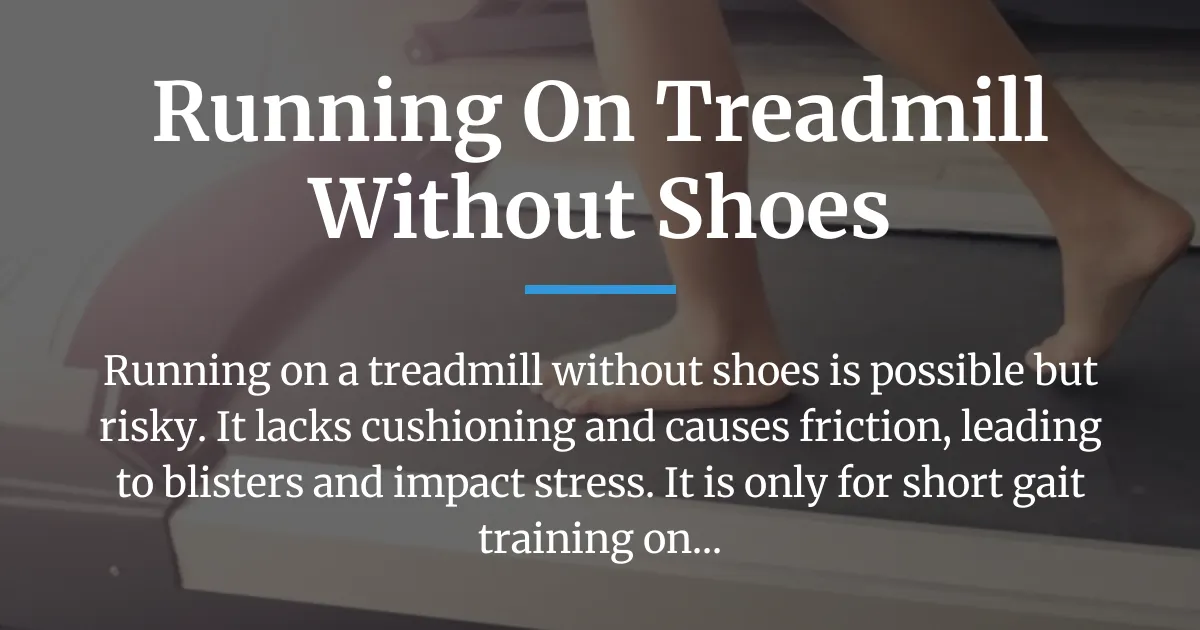
You can run on a treadmill without shoes, but it is a specific training technique. It is not a casual convenience. This practice has non-negotiable requirements and real risks. The choice is about careful evaluation, not simple preference.
The Core Verdict on Safety and Purpose
Running on a treadmill without shoes is a conditional activity. The safety verdict is not a simple yes or no. It depends completely on your goal and your setup.
This is called treadmill barefoot running. It is different from just forgetting your shoes. It is a deliberate act.
When It Might Be Acceptable
This is only for controlled, short-distance drills. The goal should be gait training or foot strengthening. You must use a personal treadmill that you own and maintain.
The session should be very brief. Think in terms of minutes, not miles. It is a focused exercise, not a full workout.
When You Must Avoid It
Do not do this for general cardio or long runs. Never attempt it on a public gym treadmill. The risks are too high.
Avoid it if you have any foot or lower leg injuries. If you are a heavy runner or have poor form, this will likely hurt you. It is not a good starting point for beginners.
The Unseen Mechanics of Friction and Force
Most discussions miss the key physics. They talk about no shock absorption. But they ignore the critical trade-off with friction. This is the core reason for the unique feeling and the main risk.
The Cushioning Trade-Off
Running shoes have cushioning. This cushioning absorbs the shock of each step. It protects your joints from impact.
But that cushioning also creates a subtle platform. It allows a tiny amount of slip or movement between your foot and the shoe. This micro-slip is actually part of the shoe’s design. It helps manage forces.
Direct Friction Explained
Without shoes, your foot meets the moving belt directly. There is no layer between your skin and the rubber. This creates immense gripping friction.
The belt is constantly pulling your skin backward. Your foot pushes forward to run. This battle creates shear stress on your skin. It generates heat quickly.
Why It Feels Like a Belt Sander
People often say it feels like a belt sander. This feeling is correct. A treadmill belt is a moving, uniform, slightly abrasive surface.
Outdoor terrain is variable. Your foot lands on different spots. On a treadmill, your foot hits the same spot on the belt every time. The same patch of skin suffers the same friction repeatedly.
Heat builds up from this constant rubbing. The combination of heat and shear is what causes that burning, abrasive sensation. It is not just impact. It is the relentless, identical friction.
Evaluating the Real Risks Beyond Hygiene
The risks go far beyond simple hygiene. The mechanics of friction and force lead to specific physical traumas. These are often understated.
Skin and Soft Tissue Trauma
Blisters are the most immediate and common result. They are not a minor issue. They are a direct signal of damage from shear force.
Hot spots and callouses form on the high-friction points. These are usually the balls of your feet and your big toes. This is not functional toughness. It is localized skin damage.
Constant rubbing can inflame nerves. This can lead to a painful condition called a neuroma. It feels like a sharp, burning pain in the ball of your foot.
Impact Stress on Lower Legs
Running shoes disperse impact forces. Without them, the vibration travels straight up. Your feet, ankles, and shins absorb all the shock.
This can lead to shin splints quickly. It stresses your Achilles tendon. Your calf muscles must work much harder to act as natural shock absorbers. They are not designed for this constant, high load on a hard surface.
The Form Paradox
Many suggest barefoot running improves form. This is only true with perfect technique. For most, it does the opposite.
If you have a heavy heel strike or overstride, barefoot running will punish you. The pain in your heel will be instant and severe. This can force a change.
But often, the pain causes you to change your form in a bad way. You might tense up or land awkwardly to avoid discomfort. This can reinforce poor movement patterns. It can lead to injuries in your knees or hips as you compensate.
Hygiene in Context
Hygiene is a serious issue on public treadmills. It is a primary reason to never go barefoot in a gym. You risk fungal and viral infections.
On a personal treadmill, hygiene is a secondary but real concern. Sweat and skin cells degrade the belt. They create a breeding ground for bacteria and odor. You must clean the machine meticulously after every use.
The Competing Argument for Foot Strength
There is a potential benefit. It revolves around strengthening your feet. But this benefit is often overstated and misunderstood.
Neuromuscular Feedback
Without shoes, you get direct ground feel. This is called proprioception. Your brain gets better signals from the nerves in your feet.
This can improve your balance and stability. You become more aware of how your foot lands. This heightened awareness is the true value.
Targeted Muscle Engagement
Small muscles in your feet must work harder. These intrinsic muscles help stabilize your arch. Your lower calf muscles also engage more to control the landing.
This engagement can build strength over time. It can lead to a more stable and powerful foot strike.
The Critical Caveat
This benefit is not automatic. It only happens under strict conditions. You must have excellent form from the start.
You must use very short durations. Think of it as a strength drill, not a run. The moment you get tired, form breaks down. Then, you gain no strength and only risk.
The foot strengthening goal is valid. But it is a narrow window of opportunity surrounded by risk.
A Practical Guide for Conditional Execution
If you understand the risks and still want to proceed, follow a strict protocol. This is not a suggestion. It is a requirement for safety.
Prerequisite Treadmill and Environment
You must use a personal treadmill. It must be clean and well-maintained. Check the belt and deck for any tears, worn spots, or abrasive surfaces.
Ensure the area around the treadmill is clear and safe. Have a towel and cleaning spray ready for immediately after.
Form as Non-Negotiable
Your form is your only protection. Focus on three absolute rules.
First, you must land on your forefoot or midfoot. A heel strike is painful and dangerous without cushioning. Let your heel kiss the belt after your forefoot lands.
Second, shorten your stride drastically. Take quick, light steps. Your foot should land under your body, not out in front.
Third, increase your cadence. Aim for more steps per minute. A faster turnover reduces the impact force of each individual step.
Progressive Integration Protocol
- Week 1-2: Walking Only. Start by walking briskly for 5-10 minutes. Feel the belt. Focus on a gentle roll from heel to toe.
- Week 3-4: Introduce Jogging Intervals. After a warm-up walk, jog for 30 seconds. Then walk for 2 minutes. Repeat 3-4 times. Total running time should not exceed 2-3 minutes.
- Month 2-3: Very Short Runs. If no pain or hot spots, you may run for up to 5 minutes at a time. Keep the total session under 10-15 minutes, including walks.
- Ongoing Limit. Even when adapted, treat this as a drill. Never use a barefoot treadmill session for your main long run. Keep it to short, focused periods.
The Socks Question Answered
Socks do not make this activity safe. They create a third category that is different from both shod and true barefoot running.
Socks reduce the direct skin friction that causes blisters. But they introduce a new problem slip. A thin sock layer can slide on both your foot and the belt.
This slip can cause your foot to move unpredictably. It stresses your ankles and can lead to a loss of control. Cotton socks are the worst. They hold moisture and become abrasive.
If you insist on using socks, choose a fitted, moisture-wicking athletic sock. Understand it is not a safe middle ground. It is a different activity with its own risks.
Making the Final Decision For Your Situation
Use this framework to decide. Be honest about your profile and goals.
Scenario 1: Do Not Attempt
This is for you if: You run at a public gym. You have any current foot, ankle, or shin pain. You are a heavier runner. You know you have a heavy heel strike. Your goal is standard cardio or weight loss. The risks far outweigh any possible benefit for you.
Scenario 2: Could Attempt for Gait Drill
This might be for you if: You own your treadmill. You are a lightweight, experienced runner. You already have a good forefoot or midfoot strike. You want a short, focused drill to improve proprioception. You are willing to follow the strict progression and listen to pain signals.
Scenario 3: Alternatives to Achieve Your Goals
You likely want foot strength or better form. Safer alternatives exist.
Consider minimalist shoes. They offer ground feel and foot strengthening. But they provide a essential barrier against friction and impact.
Do foot strengthening exercises off the treadmill. Towel scrunches, marble pickups, and calf raises build foot muscles without risk.
Focus on form drills while wearing your normal shoes. Practice high knees, butt kicks, and running on the spot. This improves mechanics safely.
Frequently Asked Questions
Is walking barefoot on a treadmill different from running?
Yes, it is completely different. Walking imposes much lower impact and shear forces. This makes it far less risky for light foot conditioning. However, all hygiene considerations remain the same for both activities.
Can I use minimalist shoes instead of going barefoot?
Minimalist shoes are the designed compromise. They offer the ground feel and foot strengthening benefits. At the same time, they provide a critical barrier against the friction that causes blisters and the direct impact on your joints.
What are the best socks for treadmill running without shoes?
If you choose to use socks, seek seamless, moisture-wicking athletic socks with a tight weave. Understand they change the activity’s dynamics. They are not protective against impact, only reduce some friction.
How do I clean my treadmill after barefoot use?
Wipe down the entire belt and deck with a disinfectant spray or solution after every session. This removes sweat and skin cells. It preserves your belt’s life and prevents harmful microbial growth and odors.
Will barefoot treadmill running make my feet tougher?
It will promote thick callouses on specific, high-friction points like the ball of your foot. This is not the same as functional toughness or strength across the entire foot structure. It is localized skin damage.
Is it bad to run barefoot on a treadmill?
It carries significant inherent risks like blistering, impact stress, and hygiene issues. For general running, it is not recommended. It can only be considered as a very short, form-focused drill under ideal conditions.
Should you run on a treadmill without shoes?
For the vast majority of people and purposes, no. The potential for injury and discomfort is high. The benefits can be achieved more safely through other methods like minimalist shoes or off-treadmill exercises.
Can I run on a treadmill without shoes at the gym?
Absolutely not. Gym treadmills are shared equipment. Going barefoot poses serious hygiene risks for you and others. It is also often against gym rules.
Is it better to run on a treadmill with or without shoes?
For effective, safe, and comfortable running, shoes are better. They provide necessary cushioning, friction management, and hygiene. Running without shoes is a niche training drill, not a better way to run.
How long does it take to get used to running barefoot on a treadmill?
Adapting your skin and muscles takes months of very gradual progression, starting with walking. Even then, you will only be adapted for short durations. True comfort for longer runs is unlikely and not advised.
Running on a treadmill without shoes remains a niche practice. The risk-to-reward ratio is high for most runners. Its value is limited to very specific training goals under tightly controlled conditions. For general fitness, the risks and discomfort almost always outweigh the potential benefits. Safer and more effective paths exist to strengthen your feet and improve your running form.