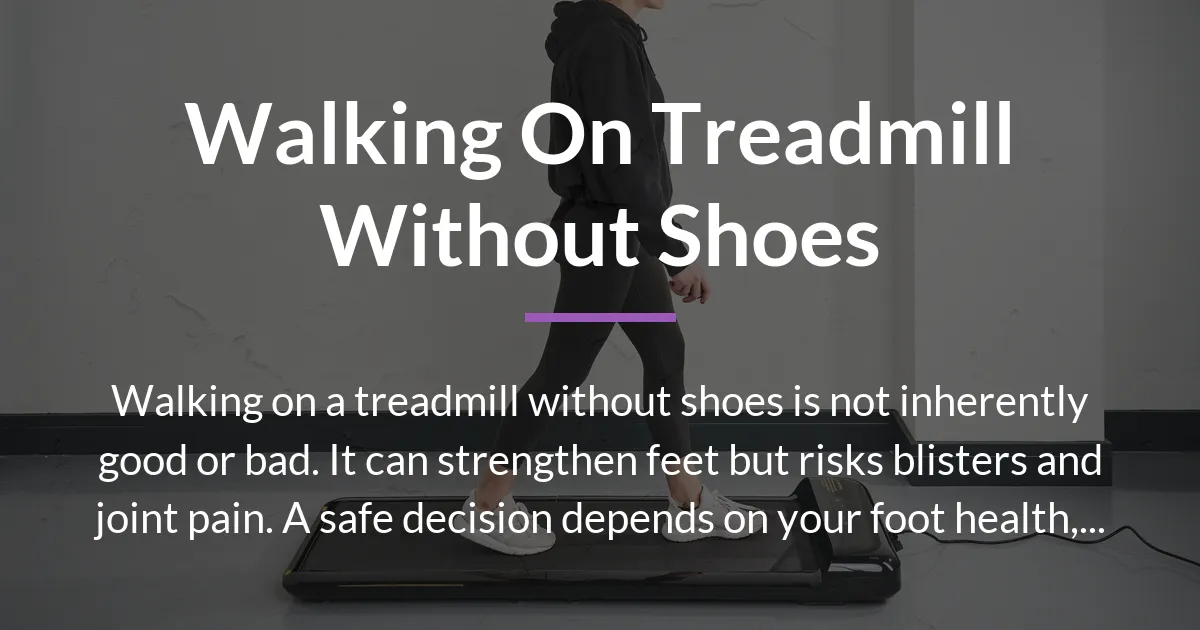
You see people do it at the gym. You wonder if you should try it at home. Is walking on a treadmill without shoes a hidden trick or a fast track to pain? Online advice conflicts wildly. This guide cuts through the noise. Walking on a treadmill without shoes is not a simple yes or no choice. It is a specific training method. It can offer real benefits but comes with real risks. Your safety and success depend entirely on your personal situation. We will help you make an informed choice with a clear plan.
How Your Body Adapts Without Cushioning
Walking with shoes is a supported experience. The cushioning and arch support do much of the work for you. Your foot muscles can relax. Your body gets less feedback from the ground. Taking your shoes off changes everything. Your body must now engage and adapt in new ways. Understanding this shift is the first step to doing it safely.
The Role of Muscle and Sensory Feedback
Your feet have dozens of muscles, tendons, and nerves. In shoes, many of these structures go unused. Walking on a treadmill without shoes wakes them up. Your foot muscles must actively grip and stabilize with each step. This is like switching from a passive passenger to an active driver.
Your nerves also send richer information to your brain. This is called proprioception. You feel the texture, temperature, and movement of the belt precisely. This feedback helps your body make tiny adjustments. Your balance and coordination improve over time. Your natural walking pattern, or gait, often becomes smoother.
Impact Forces and Joint Loading
This is the most debated point. Running shoes are designed to absorb shock. Without them, your body must manage the impact differently. It is not that the impact disappears. Instead, your technique changes to handle it.
With shoes, a hard heel strike is common. Without cushioning, a hard heel strike sends a jarring shock up your leg. Your body naturally discourages this. You will likely start landing more softly. You might land more on your midfoot or forefoot. This uses your muscles as natural shock absorbers.
This can be good for building strong legs and feet. But it can also be stressful if done too fast. Your joints and soft tissues need time to adapt to this new loading pattern.
Your Personal Readiness Checklist
Should you try walking on a treadmill without shoes? The answer is not for everyone. Use this checklist to find your personal answer. Be honest with yourself about each point.
Foot Health and History
This is the most important thing. Start by assessing your feet. Do you have any current pain, like in your heel or arch? A history of plantar fasciitis, Achilles tendonitis, or stress fractures means you must be extra careful. These conditions often need support. Walking without shoes could make them worse. If you have no current issues, you may be a better candidate.
Treadmill Deck Quality
Not all treadmills are the same. A high quality deck has some flex. It gives a little under your foot. Many commercial gym treadmills are built this way. A cheap, old, or worn treadmill belt may be very hard. A hard deck sends more force back into your body. Check your machine. If the belt is thin and the deck feels solid, it is less ideal for shoeless use.
Workout Parameters
What is your workout plan? A gentle walk at a slow pace and zero incline is a safe starting point. A fast power walk at max incline is a completely different challenge. Higher speeds and steeper inclines increase force and friction. Start with the easiest settings. Your fitness goals matter too. Is this for general health, rehabilitation, or performance training?
Long Term Fitness Goals
Why do you want to do this? If your goal is to strengthen weak feet, the process can help. If your goal is purely calorie burn, shoes might be more efficient and comfortable. Think about what you want to achieve. This will guide your approach.
A Safe Transition Plan
If your checklist suggests you can proceed, this plan is for you. Jumping in too fast is the number one cause of problems. Your skin and muscles need weeks to adapt. Follow this slow and steady protocol.
Phase One Introduction and Sensation
Start with just five minutes at the end of your normal shoed workout. Walk at a slow, comfortable pace on a flat incline. Pay close attention to the feeling. Your focus here is not exercise. Your focus is sensation. Notice how your feet meet the belt. Feel the small muscles working. After five minutes, stop. How do your feet feel? Any hot spots or sharp pain is a warning sign. A general feeling of muscle work is normal.
Phase Two Building Duration and Consistency
If phase one felt fine, you can slowly add time. Add only two to three minutes per session. Do this every other day, not every day. Your body needs rest days to rebuild and strengthen. Aim to build up to twenty minutes of continuous shoeless walking over several weeks. Consistency is more important than speed or incline during this phase.
Phase Three Integrating Intensity
Only after you can walk comfortably for twenty minutes should you consider changes. First, try a very slight increase in speed. Later, you can experiment with a small incline. Increase only one factor at a time. The increase should be so small you barely notice it. This slow progress prevents injury.
Recognizing Warning Signs Versus Normal Adaptation
It is vital to know the difference between good pain and bad pain. Normal adaptation includes a dull, muscular ache in your feet, arches, or calves. This soreness should go away in a day or two. It is a sign your muscles are getting stronger.
Warning signs mean you should stop immediately. These include any sharp, stabbing, or joint pain. A hot, burning sensation in one specific spot often means a blister is forming. Aching in your knees or hips can mean your form is off. Listen to your body. Pushing through warning signs leads to awful afterwards.
Choosing Your Approach Barefoot Socks or Minimalist
You have options besides going completely barefoot. Each choice offers a different level of feel and protection. Your choice can help you manage friction and hygiene.
The Feel of Direct Contact
Going completely barefoot gives the most sensory feedback. You will feel every seam and texture of the belt. This maximum feedback helps you refine your form quickly. However, it also presents the most friction against your skin. This can lead to blisters if you are not careful. Hygiene is also a concern, especially on a shared gym machine.
The Two Sock Method for Friction Management
This is a great middle ground for beginners. Wear a thin, fitted sock first. Then put a slightly thicker sock over it. The two layers rub against each other instead of rubbing against your skin. This drastically reduces the chance of blisters. You still get good feedback through the socks. This method is highly recommended when you are first building up the skin on your feet.
Minimalist Footwear as a Hybrid Solution
Products like Vibrams or thin minimalist shoes offer a clever compromise. They have thin, flexible soles with no cushioning or arch support. They protect your skin from direct friction and keep things hygienic. But they still let your foot move and flex naturally. Your muscles still have to work hard. Many people find this is the perfect long term solution.
Treadmill Considerations and Gym Etiquette
The machine you use makes a big difference. Your behavior in a shared space matters too. These practical points are often ignored.
Home Treadmill Versus Gym Machine
You have more control at home. You know the cleanliness of your own machine. You can adjust the room temperature. A home treadmill may be lighter duty. Check the deck as mentioned in the checklist. At the gym, assume the belt has more friction from prior use. Commercial decks are often better for this activity. But you must be mindful of others.
Maintaining Hygiene for Shared Equipment
If you walk without shoes at the gym, you must clean the treadmill after. It is simple courtesy. Use the provided disinfectant spray and a paper towel. Wipe down the belt, the sides, and the handrails. If your feet sweat a lot, this is even more important. Consider using socks or minimalist shoes in public areas to address hygiene concerns.
Frequently Asked Questions
Can walking on a treadmill without shoes help with plantar fasciitis?
It can be risky. For some people, it strengthens the arch muscles, which may help. For others, the lack of support strains the plantar fascia and makes it worse. If you have this condition, consult a doctor or physical therapist before trying. Never start during a painful flare up.
Is it better to use thick socks or go completely barefoot?
For beginners, socks are safer. They prevent blisters while you adapt. The two sock method is best. Going completely barefoot offers more training benefit for your muscles but demands tougher skin.
What is the maximum incline or speed recommended for shoeless walking?
There is no universal maximum. Your personal limit is where your form breaks down. If you start to slap your feet or feel joint pain, you are going too fast or too steep. For most people, keeping a brisk walking pace and a moderate incline is the sensible limit. Do not run without shoes unless you are an experienced barefoot runner.
How do I properly clean the treadmill after walking without shoes?
Spray a disinfectant cleaner onto a paper towel, not directly on the belt. Wipe the entire walking surface. Also wipe the side rails and console areas you may have touched. This removes sweat and skin cells.
Can I alternate between walking with shoes and without shoes on the same day?
Yes, this is a smart strategy. Do your main workout with shoes. Then, finish with five to ten minutes without shoes. This lets you gain benefits without overloading your feet. It is a great way to begin your transition.
Does walking without shoes on a treadmill make your calves sorer?
Yes, it very often does. Your calf muscles work much harder to control your footfall. This dull, throbbing calf soreness is a normal sign of adaptation. It should lessen as your body gets stronger.
Is a walking pad or foldable treadmill different for shoeless use?
Yes, often. These machines usually have a simpler, firmer deck. They are designed for light walking with shoes. Using them without shoes may be less comfortable due to the harder surface. Proceed with even more caution and shorter sessions.
What immediate feeling should make me stop my workout?
Stop for any sharp, pinpoint pain. Stop for a burning hot spot on your skin. Stop for pain in your joints like knees or hips. These are signals of potential injury. Normal muscle fatigue is a general ache, not a sharp sting.
Are minimalist shoes like Vibrams a good middle ground?
Yes, they are an excellent middle ground. They protect your skin and address hygiene issues. They still allow your foot to move and strengthen naturally. Many people transition to these after starting with socks.
How long does it typically take for feet to adapt to treadmill walking without shoes?
Full adaptation takes months. Skin toughness builds in a few weeks. Muscle strength takes a month or two. Connective tissues and bones take the longest to adapt. Be patient. A six month timeline for safe, comfortable shoeless walking is realistic.
The choice to start walking on a treadmill without shoes is a personal one. It is not a trend for everyone. Let your body’s feedback be your main guide. Start slow, focus on form, and prioritize safety over speed. By using the checklist and transition plan, you can explore this method without getting hurt. Remember, the goal is long term foot health, not a quick fix. Informed and careful practice is the true key to success with walking on a treadmill without shoes.