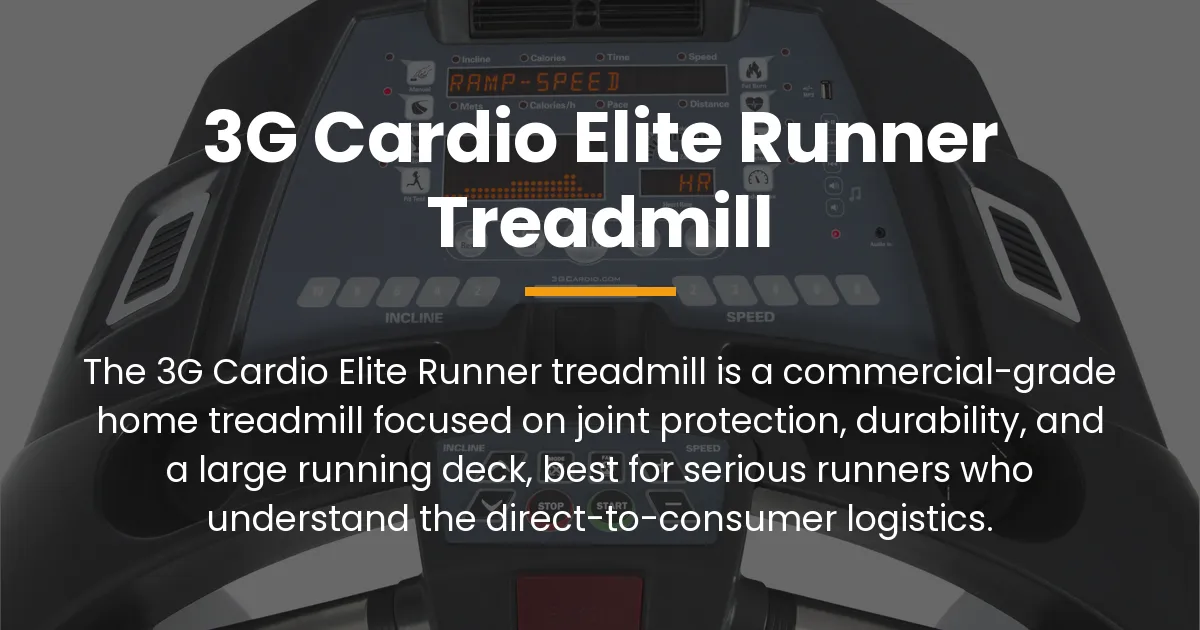
You’re not just looking for any treadmill. You’re researching a specific, high-value model, trying to justify a significant investment in your home fitness. This deep-dive analysis of the 3G Cardio Elite Runner treadmill exists to give you exactly that clarity. We’ll move beyond the sales sheets to explore the commercial-grade engineering, translate features into real-world experience, and crucially, examine the long-term ownership and logistics that other reviews gloss over, helping you decide if this is the right machine for your goals and your home.
Defining the Elite Runner Treadmill Build
This treadmill doesn’t aim to be the flashiest. Its identity is built on a foundation of durability and user protection, designed to bridge the gap between gym reliability and home usability.
Core Philosophy: The Home-Commercial Hybrid
The term “commercial construction” gets used often, but here it has specific meaning. The Elite Runner is built with components and design principles found in gym treadmills, scaled for a residential environment. This means using a heavier, more rigid frame, a more powerful motor with a higher duty cycle, and impact-absorbing systems that can handle sustained use. The goal is longevity and stability, not just for the first year, but for a decade of regular running.
The Ortho Flex Shock Suspension Explained
This is the cornerstone of the Elite Runner’s user experience. Unlike basic rubber cushioning pads, the Ortho Flex Shock system is a suspension mechanism. It’s designed to actively absorb and disperse the impact force of each footstrike laterally across the deck, rather than sending it straight back up your leg. The result is a noticeably softer landing that reduces stress on ankles, knees, and hips. For runners with past injuries, arthritis, or those simply prioritizing joint health over miles, this feature transitions from a nice-to-have to the primary reason for considering this model.
Drive System and Motor Durability
The commercial two-stage drive system refers to how power is transferred from the motor to the belt. This multi-stage process reduces direct strain on the motor, leading to quieter operation and less heat buildup over long sessions. Paired with a high-torque, continuous horsepower motor, it’s built for the consistent workload of daily runs, not just occasional walking. This engineering choice directly addresses the core concern of a home treadmill breaking down after a few years of serious use.
Frame and Deck Construction
Stability is non-negotiable for confident running. The frame uses heavy-gauge steel to eliminate any wobble or flex, even at higher speeds or inclines. The oversized 22″ x 62″ running belt provides ample space for a natural stride without feeling constrained, a key upgrade over narrower home models. This “elite platform” gives you the psychological and physical room to run freely, which is a major component of that amazing workout experience reviewers mention.
Features and User Experience
How do these engineering specs translate to your daily or weekly routine? The experience is defined by connectivity and purposeful, rather than overwhelming, technology.
The Console and BYOS Connectivity
The console takes a minimalist approach. It provides essential feedback like speed, incline, time, distance, and heart rate via the compatible non-coded wireless heart rate strap. Its most modern feature is the FreeSync FTMS Bluetooth connection. This is crucial because FTMS is a universal fitness equipment standard. It allows the treadmill’s console to transmit your speed, incline, and distance data to third-party apps on your tablet or mobile device. This enables the BYOS, or Bring Your Own Screen, model. You use your preferred tablet to display immersive running landscapes from Zwift, follow structured workouts from apps like Kinomap or Studio, or simply watch Netflix, while the treadmill itself handles the equipment data transmission seamlessly.
Integrating Workouts with FTMS Bluetooth
This connectivity is a game-changer for guided training. When you start a workout in a compatible app that controls speed and incline, the app sends those commands directly to your Elite Runner treadmill. The machine will automatically adjust, creating a hands-free, fully integrated experience. It transforms the treadmill from a simple conveyor belt into a responsive piece of smart fitness equipment. The dual water bottle holders and optional audio input become practical supports for these longer, engaged sessions.
Daily Use Controls and Ergonomics
For manual runs, the console is straightforward. One-touch speed and incline buttons allow for quick adjustments mid-stride. The My HR Zone Station lets you set a target heart rate zone, and the treadmill will subtly suggest adjustments to keep you in that zone. The design philosophy is clear: give dedicated runners the tools they need without cluttering the interface with dozens of pre-programmed workouts they’ll never use. The focus remains on the run itself.
Space Requirements and Folding Design
With a footprint of 84″ long by 35.5″ wide, this is a substantial machine. It does fold upright to save space when not in use, but you must account for the full height when folded and the space needed to safely lower and raise it. Always measure your ceiling height and room layout carefully. The weight, over 300 pounds, means moving it once assembled is a two-person job, so plan its permanent location thoughtfully.
Evaluating Value and Investment
This is the critical decision phase. Is the Elite Runner worth its price tag? The answer isn’t a simple yes or no; it depends entirely on your personal calculus of cost versus long-term benefit.
Price Comparison and Market Position
The Elite Runner sits in a premium price bracket for home treadmills. You can certainly find capable treadmills for a lower price. The comparison isn’t about getting a treadmill; it’s about investing in specific features: the Ortho Flex Shock system, the commercial two-stage drive, and the oversized deck. You are paying upfront for reduced joint impact, potential longevity, and running space. When compared to other treadmills with similar commercial-grade claims, its value often becomes clearer, especially when considering included shipping or warranty terms.
Total Cost of Ownership Deep Dive
Look beyond the sticker price. The total cost of ownership includes the initial price, any shipping fees you select, potential professional installation costs, and future maintenance. A cheaper treadmill may need a motor or board replacement in five years, effectively doubling its cost. The Elite Runner’s construction aims to avoid those mid-life failures. Consider cost-per-use over five or ten years. If you run daily, the higher initial investment spreads thin and can justify itself through reliability and the health benefit of its suspension system, which could mean fewer physio bills.
Warranty Analysis and Longevity Expectations
Understanding the warranty is key. The lifetime frame warranty covers the structural skeleton indefinitely. The 6-month guarantee covers everything else—electronics, motor, parts. This structure tells a story: the frame is built to last generations, but like any complex electromechanical device, if something is going to fail, it typically happens early. This makes the first six months a crucial shakedown period. Use the treadmill vigorously during this time. The warranty does not cover wear items like the running belt or deck, which require regular upkeep. Realistic longevity expectations are 10+ years with proper maintenance, which is the true value proposition.
Ideal User Profile for This Treadmill
This treadmill is not for everyone. Its value is maximized for a specific user. The ideal owner is a consistent runner (30+ minutes, 3-5 times a week) who prioritizes joint health and plans to use the machine for many years. They are comfortable with the BYOS model and want equipment that feels solid and stable underfoot. They are also the type of buyer who reads the fine print on shipping and warranties. If you are a casual walker or want a fully integrated touchscreen with subscriptions, your money might be spent better elsewhere.
Purchasing Logistics and Setup
Once you decide to buy, the process involves important choices that competitors list but rarely explain. Understanding these logistics prevents post-purchase frustration.
Understanding Shipping and Delivery Options
3G Cardio typically offers three tiers. Standard curbside delivery means the freight truck will drop the pallet at the end of your driveway. White Glove delivery and installation is a premium service where the delivery team brings the treadmill into your home, unpacks all packaging material, assembles it, places it, and removes the waste. The middle ground, and a common point of confusion, is “Nearest Freight Terminal” pickup.
Navigating Direct-to-Consumer Logistics
Choosing freight terminal pickup means you are responsible for getting the 300+ pound crate from the freight depot to your home. This is not a simple parcel pickup. You must call the terminal to schedule, and you typically have a limited window (often 48 hours) to collect it. You need a large enough vehicle—a pickup truck or a large van is essential. You also need a plan for unloading it at your home, which may involve renting a equipment dolly and recruiting strong helpers. This option saves money but adds significant logistical effort.
Professional Installation Versus Self-Assembly
If you don’t choose White Glove, you can hire local installers. When calling an installation company, ask very specific questions: Have they assembled this specific treadmill model before? What is their total fee (including any extra for stairs or long carry distances)? Do they warranty their own assembly work? Self-assembly is possible with two mechanically-inclined people and proper tools, but the weight and size of the main unit make it challenging. The manual is your guide, but patience and care are required to avoid damaging components during the process.
Payment Methods and Financing
3G Cardio accepts standard credit cards and, notably, HSA/FSA payments if you have a doctor’s letter of medical necessity for the treadmill. They often offer financing options like 6 months 0% interest. Using an existing PayPal account is also a preferred method for some buyers. Always check for any current promotions or if a better price is available by calling their support line directly.
Frequently Asked Questions
Can the 3G Cardio Elite Runner treadmill be used with an iPad for guided workouts?
Yes, absolutely. Through its FreeSync FTMS Bluetooth console, the treadmill can connect to your iPad. Compatible fitness apps like Zwift, Kinomap, or Studio can then display workouts on your iPad screen while controlling the treadmill’s speed and incline automatically.
What type of heart rate monitor is compatible with the console?
The console is designed to pair with a non-coded wireless heart rate strap, often a 5kHz chest strap. This type of strap is widely available and different from Bluetooth or ANT+ straps used with watches, so you may need to use the included strap or purchase a compatible one separately.
How does the Ortho Flex Shock system benefit someone with arthritis?
The Ortho Flex Shock system actively absorbs and disperses vertical impact forces. For someone with arthritis in the knees or hips, this significantly reduces the jarring shock of each step, leading to less pain during the run and less post-run inflammation, making consistent exercise more sustainable.
What is the exact height clearance needed for the treadmill’s deck?
You need to consider both the running deck height and the full height when folded. The deck itself sits about 8 inches off the floor. When folded upright, the total height is 84 inches (7 feet). Ensure you have ceiling clearance above this, plus extra room to safely grasp and lower the machine without straining.
Does the 6-month guarantee cover wear and tear on the running belt?
No, it does not. The 6-month guarantee covers defects in materials and workmanship for parts like the motor, electronics, and components. The running belt is considered a consumable wear item, similar to tires on a car. Proper alignment, tension, and lubrication will extend its life, but eventual replacement is a normal part of ownership.
Is assembly possible by one person?
It is strongly not recommended. The main unit is extremely heavy and unwieldy. The assembly process requires lifting and securing this unit to the console arms and other parts, a task that is unsafe and impractical for a single person to attempt without risk of injury or damage to the equipment.
What is the recommended maintenance schedule for the motor and deck?
For the motor and drive system, keep the area clean and free of dust. The deck requires regular lubrication with silicone-based treadmill lube to reduce friction on the belt. A good rule is to lubricate the deck every three months or every 130 miles of use, whichever comes first, but always check your manual for the manufacturer’s specific recommendation.
Does the console show metrics from third-party apps like Zwift?
No, the console does not import or display data from external apps. The data flow goes the other way. The console sends your treadmill’s real-time metrics (speed, incline, distance) to the app on your tablet. You view the immersive app content and metrics on your own separate screen.
How does the warranty process work if a part needs replacement?
You would contact 3G Cardio support by phone or email. If a covered part is determined to be defective, they will typically ship the replacement part to you free of charge. You are then responsible for installing it, or you can hire a local technician to do the installation, which would be an additional cost.
What are the dimensions when the treadmill is folded upright?
When folded to save floor space, the treadmill’s footprint reduces to approximately 35.5 inches wide by 42 inches deep. However, remember its total height extends to 84 inches, so you need vertical clearance in that smaller footprint area.
Conclusion
The 3G Cardio Elite Runner treadmill carves out a specific niche. It is a premium, durability-focused machine built for the serious home runner who values joint protection and commercial-grade construction over integrated entertainment. Its worth hinges on a clear understanding of its core benefits—the Ortho Flex Shock system and robust drive—and a willingness to navigate the logistics of a direct-to-consumer, high-weight fitness equipment purchase. If your priority is a solid, shock-absorbing platform for long-term running health, and you approach the buying process with eyes wide open to shipping and setup, the Elite Runner stands as a compelling, long-term investment in your fitness. For all others, its value proposition may be harder to justify.