An incline treadmill turns a simple walk into a powerful lower body workout. While walking on a flat surface is good for your heart, adding a hill changes everything. Understanding what muscles incline treadmill work targets helps you match the exercise to your goals, whether that’s building stronger legs, shaping your glutes, or simply getting a more effective cardio session.
Primary Muscles Worked by an Incline Treadmill
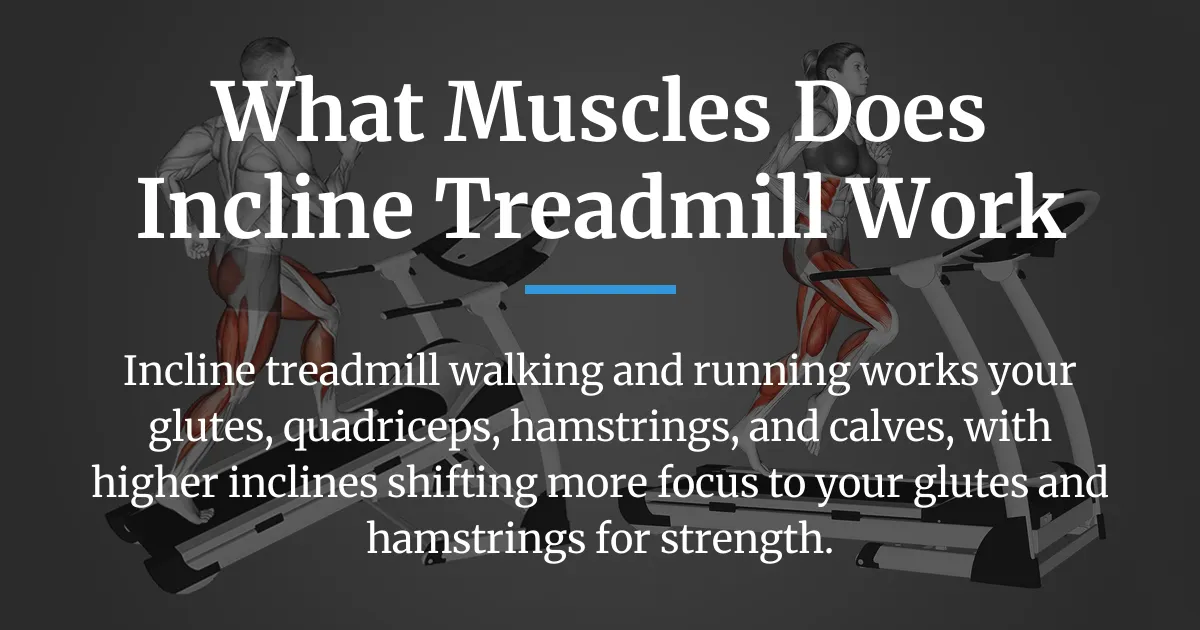
Walking or running on an incline primarily works four key lower-body muscle groups: your glutes, quadriceps, hamstrings, and calves. This is the direct answer, but the real magic is in how the incline forces these muscles to work harder than they do on flat ground.
Your Glutes
Your glutes are the large muscles in your buttocks. They are the main drivers for pushing your body uphill. On a flat treadmill, they might not work very hard. On an incline, they must contract powerfully to extend your hip and propel you forward and upward with each step. This makes incline training one of the best ways to activate and strengthen these muscles without heavy weights.
Your Quadriceps
Your quadriceps are the muscles on the front of your thighs. They work hard to straighten your knee as you step up onto the inclined belt. The steeper the hill, the more your quads engage to lift your body weight against gravity. They act like stabilizers and lifters throughout the entire movement.
Your Hamstrings
The hamstrings, on the back of your thighs, team up with your glutes. They help extend your hip during the powerful push-off phase of your stride. They also bend your knee, pulling your foot off the belt to prepare for the next step. Incline walking creates a perfect balance of work between the front and back of your thighs.
Your Calves
Your calf muscles provide the final push through your toes. They work constantly to stabilize your ankle on the angled surface and give you that last bit of power to move forward. You will feel them working more on an incline, especially if you focus on a full stride.
Secondary and Stabilizing Muscles
While the main work is done by the big leg muscles, an incline treadmill also engages your core and hip stabilizers. Your abdominal and lower back muscles work to keep your body upright and balanced on the moving hill. Smaller muscles around your hips and inner thighs also activate to keep your stride steady, providing a full lower-body challenge.
How Incline Changes Muscle Engagement
The shift from a flat surface to an inclined plane is a game changer for your muscles. On flat ground, your movement is mostly forward. On a hill, you are moving forward and upward, which means you are fighting gravity directly.
This fight against gravity requires more force from the muscles on the back of your body, known as the posterior chain. Your glutes and hamstrings have to contract much harder to extend your hips and push you up the slope. This mimics real-world activities like hiking, climbing stairs, or walking up a steep street, turning your cardio machine into a tool for functional strength.
The added resistance means your muscles are under tension for a longer portion of each step. This increased time under tension is what leads to greater muscle endurance and, over time, strength development compared to walking on a flat surface at the same speed.
Incline Levels and Muscle Focus
Not all inclines are the same. The percentage on your treadmill console acts like a dial, letting you control which muscles get the most attention. This is the critical detail most guides miss.
Low Incline: 1% to 4%
A slight incline, even just 1% or 2%, is more than a gimmick. It better simulates the slight resistance of walking outdoors compared to a perfectly flat treadmill belt. At this level, you get a small boost in muscle engagement across your legs, but the primary benefit is to your heart rate and calorie burn. It’s an excellent starting point for beginners or a gentle way to add intensity to a longer walk.
Moderate Incline: 5% to 10%
This is the efficiency zone for balanced muscle development. Here, the demand on your glutes, quads, hamstrings, and calves increases significantly. You are building muscular endurance, which means training your muscles to work harder for longer periods. This range is perfect for those looking to tone their legs, improve cardiovascular health, and build a foundation for more intense training.
High Incline: 10% and Above
Enter the strength and power zone. High inclines place extreme emphasis on your posterior chain. Your glutes and hamstrings become the dominant movers, responsible for the powerful hip extension needed to climb. Your quadriceps still work hard, but more as stabilizers for your knees. This level offers significant strength training benefits and is highly effective for building and activating the glute muscles. It’s challenging but very effective for focused development.
Walking Form for Targeted Muscle Engagement
Knowing the muscles is one thing. Feeling them work is another. If you don’t feel your glutes firing on a high incline, your form is likely the culprit. A few simple adjustments can make all the difference.
First, focus on your body lean. You should lean forward slightly from your ankles, not your waist. Imagine your whole body is a straight line from your head to your ankles, tilted forward to match the slope. This position naturally engages your glutes and hamstrings. Leaning back or holding the rails shifts the work to your quads and lower back.
Next, shorten your stride a little. Taking overly long steps can strain your hips and reduce muscle efficiency. Aim for a natural, powerful stride where you push off firmly through your mid-foot and heel, feeling the ground move behind you. This push-off motion is where your glutes and hamstrings do their best work.
Avoid holding onto the handrails for support. Gripping the rails reduces the load on your core and lower body, cheating your muscles out of the work. If you need to balance, lightly rest your fingertips. Let your legs carry your weight. This simple change dramatically increases the intensity and effectiveness of the workout for your target muscles.
Structuring Your Incline Treadmill Workout
You can use incline training for different fitness goals by changing your workout structure. The best ways combine incline level, speed, and time to create the effect you want.
For Muscle Endurance and Calorie Burn
Use moderate inclines for sustained periods. A great workout is 30 minutes of continuous walking at a 5% to 8% incline at a brisk, challenging pace. This keeps your heart rate elevated and your muscles under constant, moderate tension, building stamina and burning calories efficiently.
For Strength and Glute Development
High-incline intervals are key. After a warm-up, try alternating between short, intense climbs and recovery periods. For example, walk for 2 minutes at a 12% incline, then lower to a 2% incline for 2 minutes of recovery. Repeat this cycle 5 to 8 times. The high-incline intervals maximize glute and hamstring activation, promoting strength gains.
For Beginners or Knee Health
Start with a lower intensity. Begin with 10-15 minutes at a 1-3% incline at a comfortable pace. Focus on mastering the proper form without holding the rails. This low-impact approach strengthens the muscles around the knees without the additional stress of higher inclines, which can be beneficial for some with knee concerns when done correctly.
Frequently Asked Questions
Does incline treadmill walking build muscle or just endurance?
It can build both. For muscle growth, or hypertrophy, you need to provide enough resistance to challenge the muscles. Walking at a high incline (10%+) at a challenging pace can provide this stimulus, especially for beginners. For advanced trainees, it builds excellent muscular endurance and can complement a strength training routine.
Is it better to increase speed or incline for glute development?
For targeting the glutes, increasing the incline is generally more effective than increasing speed on a flat surface. A higher incline directly demands more powerful hip extension from your glutes. Speed on a flat surface often relies more on your calf muscles and momentum.
Can incline treadmill work help with knee pain?
It can, but you must be careful. A slight incline (1-3%) can reduce impact compared to running on flat ground and strengthen the quadriceps and hips, which support the knee. However, very high inclines may increase strain for some individuals. Always start low, focus on form, and consult a professional if you have a medical condition.
How does incline treadmill work compare to a stair climber for leg muscles?
Both are excellent. A stair climber intensely targets the glutes, quads, and calves with a very specific climbing motion. An incline treadmill offers more versatility—you can walk, run, or adjust the incline to shift focus. The treadmill may also feel more natural and be easier on the lower back for some people.
Should I hold onto the rails when using an incline treadmill?
It is best not to hold on. Holding the rails reduces the workout’s intensity for your core and lower body muscles, lowers your calorie burn, and can encourage poor posture. If you need balance, lightly touch the rails with your fingertips without supporting your weight.
Can you get a good leg workout just by walking on an incline?
Absolutely. Walking on a moderate to high incline provides a substantial resistance workout for your legs. It may not replace heavy squatting for maximal strength, but it is extremely effective for building muscular endurance, tone, and functional leg strength, especially when you maintain proper form without holding on.
Understanding what muscles incline treadmill work targets allows you to move with intention. It’s not just about walking uphill. By choosing your incline level and perfecting your form, you directly control the challenge for your glutes, hamstrings, quads, and calves. This knowledge turns every session into a strategic step toward stronger legs, better endurance, and achieving your personal fitness goals.