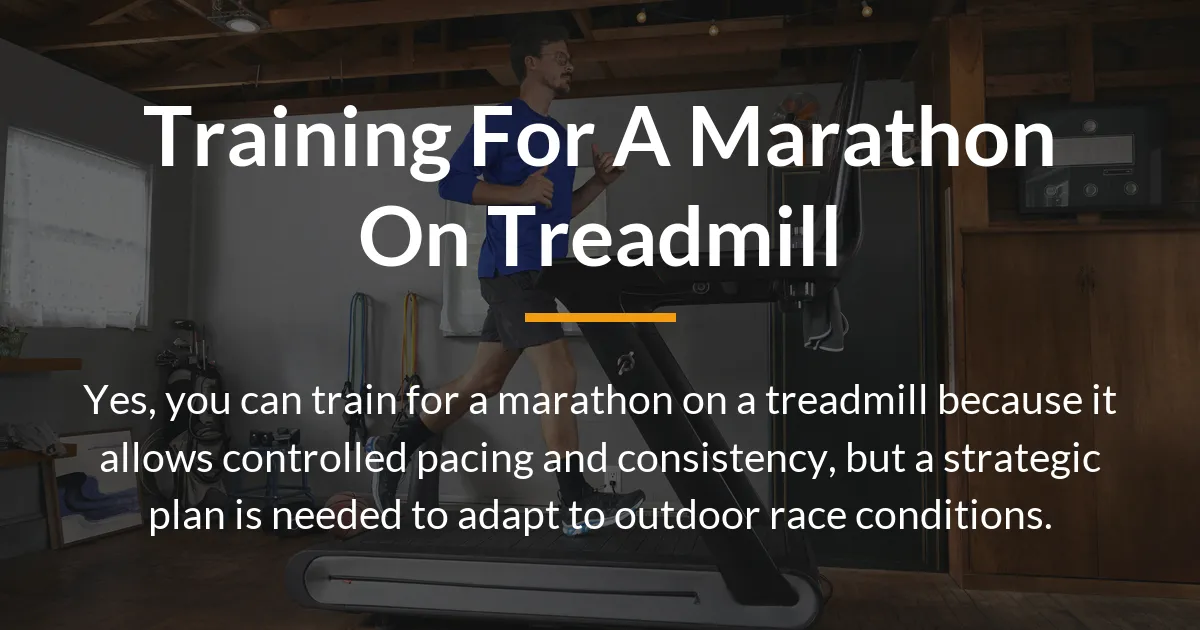
Life can keep you indoors. Weather, schedule, or safety might force your runs inside. You stare at your treadmill and wonder if it can really prepare you for 26.2 miles. The answer is yes. Training for a marathon on a treadmill is not just possible; it can be effective with the right strategy. This guide gives you that precise plan, filling in the gaps other articles miss to get you from the belt to the start line ready and strong.
The Physics of Treadmill Running Versus The Road
Running on a treadmill is not the same as running outside. The machine changes basic physics. Understanding this is your first step to adapting your training correctly.
The Missing Propulsive Phase
On the road, you push your body forward against the ground. Your leg muscles work hard to propel you. The treadmill belt moves backward under your feet.
This belt movement does some of the work for you. It pulls your leg back after each step. Your hamstrings and glutes may not engage as fully. This can lead to muscle imbalances if not addressed.
Understanding Lack of Air Resistance
Outdoor running requires you to push through the air. This wind resistance increases with your speed. It adds a small but real extra effort, especially on windy days.
A treadmill run has no air resistance. The still air of a room makes running feel easier at the same pace. This is why a pace on the display might not match the effort of an outdoor run.
Controlled Surface vs. Variable Terrain
A treadmill offers a perfectly flat, consistent belt. The road is never perfectly flat. It has subtle slopes, cracks, and turns. Your ankles and stabilizer muscles constantly adjust to these changes.
The controlled surface means these smaller muscles get less work. They can become lazy. This is a hidden risk for injury when you suddenly switch to outdoor running.
What the Treadmill Belt Actually Does for Your Stride
The moving belt can shorten your natural stride. You may take quicker, shorter steps. This can change your running form over many miles.
It also provides a consistent landing impact. While this can be gentle on joints, it is a repetitive stress on the same tissues. Outdoor surfaces vary the impact slightly with each step, which can be less stressful in the long run.
Building a Treadmill-Specific Marathon Training Plan
A standard marathon plan needs adjustments for the treadmill. You cannot just copy outdoor workouts. You must rebuild them with the machine’s limits and benefits in mind.
Reconstructing Key Workouts: Long Runs, Tempo, Intervals
Your long run is the core of marathon training. On a treadmill, you must fight boredom but also simulate fatigue. Break the run into segments. Change the incline or pace every 20 minutes to keep your mind and body engaged.
Tempo runs are about sustained effort. Since treadmill pace can be misleading, use your heart rate or perceived effort. Find a speed that feels “comfortably hard” and hold it. Do not just pick a number from an outdoor plan.
Speed sessions like intervals are possible. Use the treadmill’s precise controls. For example, do one minute fast followed by two minutes slow. Repeat. If your treadmill has a speed limit, use incline to increase effort. Run at a high incline for short bursts instead of pure speed.
The Principle of Perceived Effort Over Displayed Pace
Do not become a slave to the pace display. Your body does not know miles per hour. It knows effort. An eight-minute mile on the treadmill might feel like a seven-minute mile effort outside due to lack of air resistance and the belt assist.
Learn to rate your effort on a scale of one to ten. A long run should feel like a five or six. A tempo run is a seven. Interval efforts are an eight or nine. Trust this feeling more than the digital numbers.
The Muscle Neglect Principle: Mandatory Strength Work
This is the critical compensatory work most plans ignore. The treadmill underworks specific stabilizer muscles. You must strengthen them off the belt to stay balanced and prevent race-day injuries.
Target Areas: Hips, Ankles, Stabilizers
Your hip abductors, which move your leg sideways, get little work on a stable belt. Your soleus, a lower calf muscle, also becomes lazy. These muscles are vital for stability on variable roads.
Neglect them, and you risk knee pain, shin splints, or form breakdown when you run outside. This strength work is not optional. It is as important as your long run.
Sample Twice-Weekly Routine
Do this routine on days you are not running or after an easy run. It should take about 20 minutes.
First, do banded lateral walks. Place a resistance band around your ankles. Take side steps, keeping tension. This wakes up your hip muscles.
Second, perform single-leg calf raises. Stand on one foot and rise onto your toes slowly. This targets the soleus and improves ankle stability.
Third, add planks and side planks. These build core strength, which is essential for maintaining form over marathon distances. Do each exercise for three sets of 12 to 15 repetitions.
Incline as a Strategic Tool, Not a Simple Fix
Many articles say to set a 1-2% incline to mimic outdoor running. This is a good start, but it is simplistic. The incline does not fully copy air resistance or terrain changes.
Use incline strategically. For long runs, use a 1% incline to better match road effort. For strength, do hill repeats by increasing the incline for short periods. This builds power that translates well to outdoor racing.
From Belt to Asphalt: Your Race-Day Transition Plan
This is the most overlooked part of treadmill marathon training. You cannot run hundreds of miles inside and then line up on race day. Your body needs a gradual transition to the road. Without it, you risk injury and a poor performance.
Why a Direct Switch Causes Injury
Your muscles, tendons, and bones adapt to the treadmill’s flat, consistent surface. The road is harder and more variable. A sudden switch shocks these tissues.
The impact forces are different. The need for stabilization increases instantly. This often leads to shin splints, knee pain, or plantar fasciitis. A phased plan lets your body adapt safely.
Phase 1 (Weeks 6-4 Out): Integrating Easy Outdoor Runs
Start with your easiest runs. About six weeks before your marathon, take one or two short, easy runs per week outside. Keep these runs very comfortable. Focus on how the ground feels.
Monitor your body for new aches. Your legs might feel heavy or sore in new places. This is normal. It means your stabilizer muscles are waking up. Do not increase pace or distance during this phase.
Phase 2 (Weeks 3-2 Out): Moving Your Long Run Outside
Now, move your most important workout outdoors. About three weeks before the race, do your long run on the road. Choose a route similar to your marathon course if possible.
This run will feel harder. Your pace will likely be slower. That is expected. The goal is to get your body used to the duration and impact of outdoor running. Practice your race day nutrition and hydration during this run.
Phase 3 (Final 10-14 Days): Adapting Speed and Tapering
In the last two weeks, your mileage drops for the taper. Now, move your final speed session outside. This could be a short tempo run or some light strides.
This helps your nervous system adapt to changing pace on real terrain. After this, stick to easy outdoor runs or return to the treadmill for comfort. The key is to reduce overall stress while letting your body complete its adaptation.
Key Signals to Monitor: Soreness and Form Breakdown
During the transition, listen to your body. Sharp pain is a warning sign. Dull muscle soreness in your calves, shins, or hips is normal. It shows your body is adapting.
Watch for form breakdown. If you start shuffling or your stride becomes uneven, you may be tiring new muscles. Take an extra rest day or shorten a run. This careful monitoring prevents overuse injuries before the big day.
Executing Your Treadmill Marathon Training
With the plan set, the daily execution matters. How you manage your time, mind, and body on the treadmill will determine your success.
Mental Strategies for High-Mileage Indoor Runs
Boredom is the biggest mental hurdle. Break long runs into chunks. Watch a movie, listen to an audiobook, or follow a virtual running course. Change your entertainment every 30 minutes to stay engaged.
Set small goals during the run. Focus on reaching the next mile or the next song. Do not think about the total distance all at once. This makes the time pass more easily.
Practicing In-Run Nutrition and Hydration
Do not save your fueling practice for outdoor runs. Set up your water bottle and gels within easy reach on the treadmill. Practice taking them at your planned race intervals.
This trains your stomach and your coordination. It also makes fueling a normal part of your long run routine. This habit will pay off on race day when everything feels familiar.
Gear and Setup for Comfort and Safety
Use a fan to keep cool. Treadmill runs can get hot without wind. Good airflow prevents overheating and mimics outdoor conditions better.
Wear the same shoes you plan to race in. This breaks them in and lets your feet adapt. Always use the safety clip. It stops the belt if you slip, preventing serious injury during high-mileage training.
Scheduling and Recovery Considerations
The convenience of a treadmill lets you run any time. But keep a consistent schedule. Your body adapts best with regular rest. Plan your hard workouts with easier days between them.
Recovery is still crucial. After long treadmill runs, do gentle stretching. Use a foam roller on your legs. The repetitive motion can make muscles tight. Active recovery keeps you ready for the next workout.
Frequently Asked Questions
Can I train for a Boston Marathon qualifying time on a treadmill?
Yes, it is possible, but it requires extra caution. Treadmill pacing can be inaccurate for outdoor race conditions. You must use the transition plan to validate your fitness outdoors. In the final weeks, do a time trial or long run outside to gauge your true pace. This will tell you if you are on track for your goal time.
How much treadmill incline truly equals outdoor running?
A 1% incline is a good rule of thumb to better match the effort of outdoor running on a flat road. It accounts for the lack of air resistance. However, it does not perfectly simulate wind or terrain changes. For a more accurate feel, focus on your perceived effort level and heart rate rather than relying solely on incline settings.
What is the best way to simulate race day fueling during long treadmill runs?
Set up your fuel and water exactly as you would for the race. Use the same brands and timing. Place them on a table next to the treadmill. Practice taking gels while running at your goal pace. This rehearses the logistics so it becomes automatic, reducing stress on race day.
My treadmill only goes to 10 mph (6:00/mile pace). How can I do speed work for a faster marathon?
Use incline to increase intensity. Run at the maximum speed but add a 3-5% incline for interval periods. This creates a high-effort session that builds strength and power. You can also focus on longer tempo efforts at your top speed, which improves lactate threshold, a key factor for marathon success.
Is training for a marathon on a treadmill bad for your joints?
Not necessarily. The treadmill belt can be gentler than concrete, reducing immediate impact. However, the repetitive stress on the same muscles and joints without variation can lead to overuse injuries. This is why the mandatory strength work and phased transition plan are critical. They prepare your joints for the different demands of outdoor running.
Can you train for a half marathon only on a treadmill?
Absolutely. The principles are the same but scaled down. You still need to adjust workouts, do strength training, and follow a transition plan if your race is outdoors. The shorter distance makes the mental challenge and physical adaptation slightly easier, but the strategic approach remains important.
How do I prevent boredom during two-hour treadmill runs?
Use a mix of entertainment. Switch between music, podcasts, and TV shows. Some runners use apps that simulate outdoor routes with changing videos. Also, break the run into segments with small pace or incline changes every 15-20 minutes. This gives your mind small milestones to focus on.
Should I do all my runs, including speed sessions, on the treadmill?
You can, but it is beneficial to move some speed work outside during the transition phase. The treadmill is excellent for controlled intervals, but outdoor speed work helps your body learn to handle turns and wind. A balanced approach, as outlined in the transition plan, yields the best results.
What is the biggest mistake people make when training for a marathon on a treadmill?
The biggest mistake is ignoring the need for supplemental strength training and a proper transition to outdoor running. Many runners focus only on logging miles on the belt. This neglects the stabilizer muscles and leads to injury or poor performance on race day. Following a holistic plan avoids this pitfall.
Can I use a treadmill training plan for an ultra marathon?
Yes, the concepts extend to ultra marathon training. The key adjustments involve even more focus on mental stamina, fueling practice for longer durations, and a very gradual transition to outdoor trails. The muscle neglect principle is even more critical due to the extreme distances and varied terrain of ultra races.
Training for a marathon on a treadmill is a viable and disciplined path. It demands a smart strategy that understands the machine’s limits. You must adapt your workouts, commit to strength training, and follow a careful transition to the road.
This approach turns the treadmill from a simple convenience into a powerful training tool. It lets you build consistency and control your environment. When paired with the right plan, it can lead you to a successful marathon finish.
Remember the pillars: know the physics, rebuild your plan, strengthen your weak spots, and bridge the gap to asphalt. With this complete guide, you have the framework to start your journey. Your marathon goal is within reach, one step at a time, even if those steps are on a moving belt.